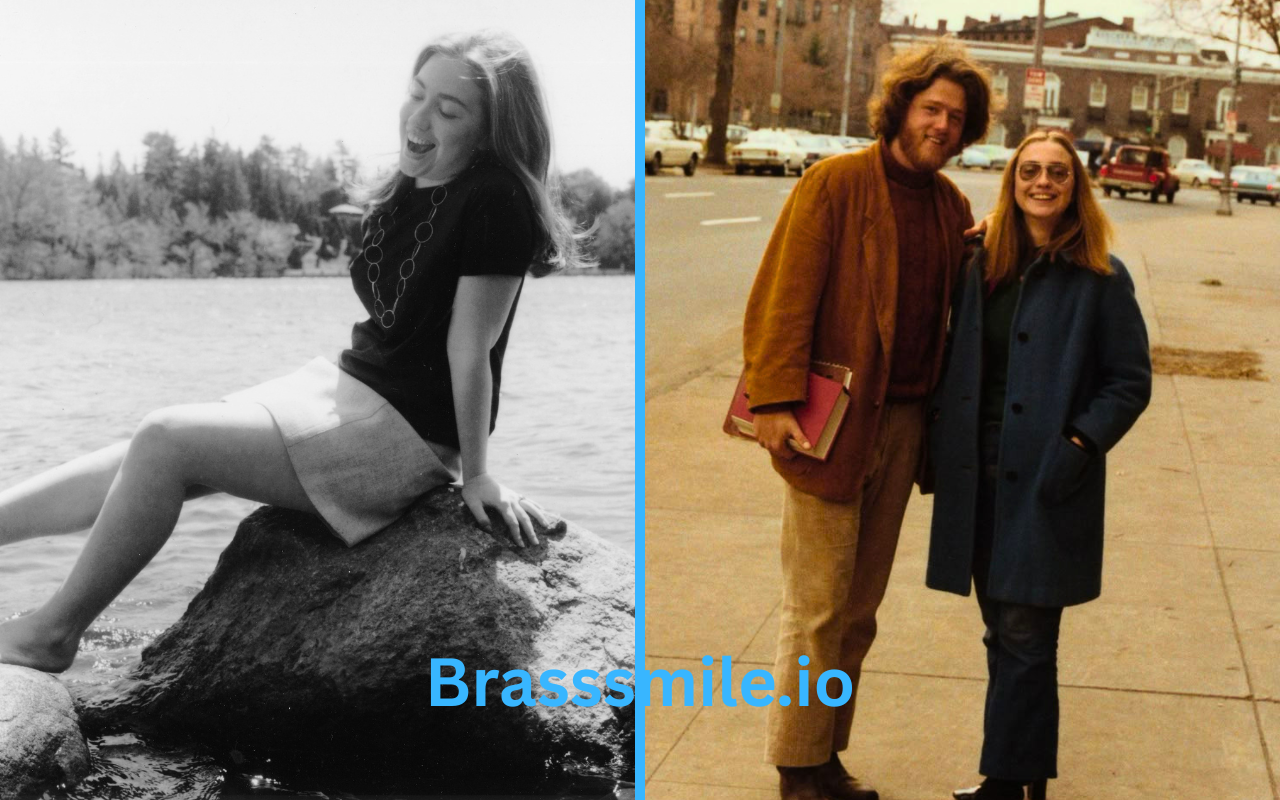
Young Hillary Clinton: The Formative Years of a Trailblazer
Before she became a household name synonymous with American politics, before the White House years and the historic presidential campaigns, there was a young girl from the Chicago suburbs with a sharp mind, an iron will, and a burgeoning desire to make a difference. Understanding the early life of Hillary Rodham Clinton is to understand the bedrock of resilience, intelligence, and conviction that would define a life lived in the public eye. Her journey from a Republican-leaning teen in Park Ridge to a transformative figure in global politics is a story of evolution, driven by a changing world and an unyielding spirit.
| Quick Facts | |
|---|---|
| Full Name | Hillary Diane Rodham Clinton |
| Date of Birth | October 26, 1947 |
| Age | 78 (as of 2026) |
| Birthplace | Chicago, Illinois |
| Profession | Politician, Diplomat, Lawyer, Author |
| Parents | Hugh Ellsworth Rodham (Father), Dorothy Howell Rodham (Mother) |
| Siblings | Hugh Rodham Jr. (brother), Tony Rodham (brother) |
| Education | Wellesley College (B.A.), Yale Law School (J.D.) |
| Net Worth | Estimated $45 million (Combined family net worth often cited around $120M) |
| @hillaryclinton | |
| Twitter/X | @HillaryClinton |
Table of Contents
ToggleA Suburban Childhood Rooted in Midwestern Values
The story begins in the post-war optimism of the 1950s. Hillary Diane Rodham was born on October 26, 1947, in Chicago, Illinois, but her character was forged in the conservative, all-white enclave of Park Ridge . It was here, in a comfortable two-story brick house, that her parents, Hugh and Dorothy Rodham, instilled a complex set of values that would shape her worldview. Her father, a staunch Republican and owner of a small drapery fabric business, was a proponent of “rugged individualism,” hard work, and self-reliance . He pushed his eldest daughter to strive for excellence, believing she could always do better. This instilled in Hillary a fierce drive and a belief in personal responsibility.
Her mother, Dorothy, presented a contrasting, yet equally influential, force. A quiet Democrat who had overcome a difficult childhood, Dorothy was the wellspring of empathy in the household . She nurtured her daughter’s intellectual curiosity, encouraged reading, and taught the importance of standing up for oneself. “You have to stand up for yourself,” Dorothy famously told a young Hillary. “There’s no room in this house for cowards” . This powerful combination—her father’s emphasis on discipline and her mother’s deep-seated compassion—created the unique tension at the heart of young Hillary’s identity. She grew up in the “push and tug” of these values, a dynamic that would eventually lead her to reconcile conservative principles with a progressive vision for social justice .
Education and a Political Awakening
A bright and active student, Hillary’s political journey began in the hallways of Maine South High School and within the youth groups of the First United Methodist Church . Initially, she mirrored her father’s Republican politics, even campaigning for Barry Goldwater in 1964 and chairing a local chapter of the Young Republicans . However, the tumultuous social and political upheaval of the 1960s was a catalyst for profound change.
As she transitioned to Wellesley College in 1965, the world was shifting. The assassinations of Malcolm X, Robert F. Kennedy, and Martin Luther King Jr. deeply affected her, forcing a re-evaluation of her political beliefs . In a dramatic shift, she joined the Democratic Party, volunteering for the anti-war campaign of Eugene McCarthy and working on a subcommittee for Senator Walter Mondale . It was during this time that her early experiences with her Methodist minister, Don Jones, who exposed her to the civil rights movement, truly came to the forefront. She had gone to hear Dr. Martin Luther King Jr. speak in 1962, a seminal moment that awakened her “sense of obligation to my country and my commitment to service” .
Her time at Wellesley was transformative. She excelled academically and became a campus leader, ultimately being elected by her classmates to be the first student commencement speaker . In a move that foreshadowed her courage, she gave an impromptu, fiery speech that openly challenged the Republican senator who had spoken before her, capturing the attention of the nation and earning her a feature in Life magazine . This was the young Hillary’s introduction to the national stage.
From Yale Law to a Life of Service
Following Wellesley, Hillary attended Yale Law School, a decision that would change the course of her life . There, she honed her intellect and deepened her commitment to public service, focusing on children’s rights and family law, inspired by the work of children’s advocate Marian Wright Edelman . It was also at Yale that she met a charismatic fellow student named Bill Clinton, with whom she formed an instant and powerful intellectual and romantic connection .
After graduating, Hillary faced a pivotal choice. She turned down lucrative job offers from prestigious corporate law firms, choosing instead to follow her passion for advocacy. She worked for Edelman’s Children’s Defense Fund and then took a position as a staff attorney on the House Judiciary Committee investigating the Watergate scandal and the possible impeachment of President Richard Nixon . This experience, as part of the very machinery that would lead to a president’s resignation, was an invaluable education in the law and politics at its highest level.
Her career path then took a personal turn. Choosing to follow her future husband, Bill Clinton, to Arkansas, she moved to his home state—a decision that surprised her feminist friends . It was here, at the University of Arkansas School of Law and later the Rose Law Firm, that she built her own career as a legal expert, becoming one of the most influential lawyers in America while simultaneously supporting Bill’s political ambitions . When he became Governor of Arkansas, she took on the role of First Lady while maintaining her career, a model she would later bring to the White House. As the First Lady of Arkansas, she spearheaded significant education reform initiatives and founded Arkansas Advocates for Children and Families .
The Architect of a Legacy
The young Hillary Clinton was, in many ways, a woman before her time. She was a liberal in a conservative town, a career woman before the term was common, and a political partner in an era when political spouses were expected to be silent supporters. Her early life and career laid the foundation for a legacy that includes being the first First Lady to hold a postgraduate degree, the first First Lady to be elected to national office as a U.S. Senator, and the first woman to secure the presidential nomination for a major party . She has received countless awards, including a Grammy for her audiobook It Takes a Village, the Liberty Medal, and the Presidential Medal of Freedom .
Her wealth, estimated at around $45 million, is a reflection of her success as a best-selling author of books like Living History, and a sought-after public speaker, with fees that have commanded hundreds of thousands of dollars per appearance . Yet, despite this financial success, her story is not one of material ambition, but of a singular dedication to a life of purpose, a drive to break barriers, and a belief in the power of public service. She remains active on social media, using platforms like Instagram and Twitter to connect with the public, share her insights, and champion the causes she has fought for her entire life.
Her journey is a testament to the power of resilience and the ability to evolve. As young Hillary Clinton continues to pave the way for future generations, her story stands as a reminder of how resilience and purpose can shape a meaningful legacy. From the dinner table debates in Park Ridge to the halls of power in Washington D.C., she has demonstrated that a life of influence is not just about the positions you hold, but about the convictions you hold onto and the relentless pursuit of making “what appears to be impossible, possible.
Read this to: Jasper Breckenridge Johnson: The Untold Story of Don Johnson’s Talented Son