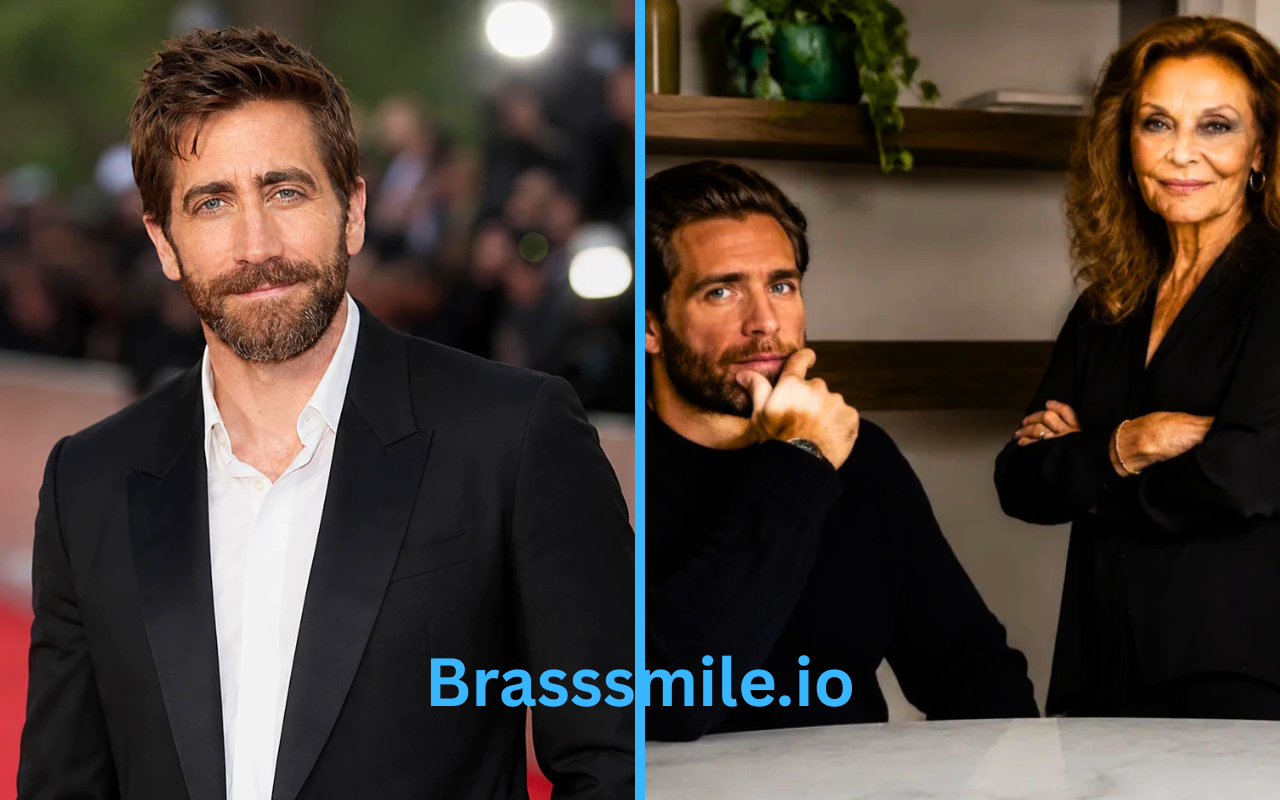
Diane von Furstenberg and Jake Gyllenhaal: Two Icons of American Culture
What do a fashion designer who redefined women’s dressing and an actor who became the face of a generation have in common? Both are icons in their own right—trailblazers who have left an indelible mark on American culture. Diane von Furstenberg gave women a uniform of liberation with her revolutionary wrap dress. Jake Gyllenhaal gave audiences a mirror into the complex, often turbulent depths of the human soul through his unforgettable performances. This article takes a deep dive into the lives of these two remarkable individuals, exploring their origins, their epic journeys to the top, and the powerful, enduring legacies they are building.
Table of Contents
ToggleAt a Glance: Diane von Furstenberg
| Category | Details |
|---|---|
| Full Name | Diane Simone Michele Halfin |
| Born | December 31, 1946, Brussels, Belgium |
| Occupation | Fashion Designer, Philanthropist, Author |
| Known For | Iconic Wrap Dress, DVF Brand, Women’s Empowerment |
| Parents | Leon (Lipa) Halfin, Liliane Nahmias |
| Siblings | None |
| Spouses | Prince Egon von Furstenberg (m. 1969–1983); Barry Diller (m. 2001) |
| Children | Alexandre von Furstenberg, Tatiana von Furstenberg |
| Net Worth | Estimated $1.2 Billion (2025) |
| Social Media | Instagram: @dvf; Twitter: @DVF |
Diane von Furstenberg: The Princess Who Became Her Own Queen
Early Life Forged in Resilience
Diane von Furstenberg’s story begins not in the glamorous world of fashion, but in the shadow of the Holocaust. Born Diane Simone Michele Halfin in Brussels in 1946, she was the daughter of a Romanian father and a Greek-born Jewish mother, Liliane, who was a survivor of the Auschwitz and Ravensbrück concentration camps . Her mother weighed a mere 49 pounds upon liberation and was told she would likely never have children, and that if she did, the child would be abnormal . Diane was born just 18 months later. She would later call herself her mother’s “victory” . This legacy of survival and resilience was the bedrock upon which her entire life was built. Her mother instilled in her a fundamental philosophy: “fear is not an option” . This powerful mantra would guide her through every challenge she faced.
Raised in Europe, von Furstenberg studied at the University of Geneva, where she met her first husband, Prince Egon von Furstenberg . Upon marrying into German royalty in 1969, she had entered a world of privilege and high society. But for Diane, this was never enough. She had a deep-seated desire for independence, to be someone of her own making rather than just a “plain little girl who got married beyond her desserts” . This ambition was the catalyst for her legendary career.
The Birth of an Icon: The Wrap Dress
Diane von Furstenberg moved to New York and, with the backing of her husband, began her journey into fashion. She learned the intricacies of fabric, color, and cut from the Italian textile manufacturer Angelo Ferretti . The creative spark that would change fashion history came in 1972 when she saw Julie Nixon Eisenhower on television wearing one of her wrap tops with a matching skirt . In a moment of genius, von Furstenberg decided to combine the two garments into one: the iconic wrap dress .
Launched in 1974, the jersey knit wrap dress was more than just a piece of clothing; it was a symbol. It was accessible, affordable, and flattering on women of all shapes, ages, and sizes. In the post-women’s lib era, the dress offered a new kind of uniform for the modern, independent woman—one that was both chic and comfortable. It famously allowed a woman to get dressed “in one step” and could be worn from the office to a night out. The dress was a cultural phenomenon. By 1976, she had sold over one million of them, appearing on the cover of Newsweek and being declared “the most marketable woman since Coco Chanel” . The wrap dress was a $150 million business, solidifying her status as a fashion titan and feminist icon .
Navigating Setbacks and a Legendary Comeback
The 1980s, however, brought a harsh dose of reality. The fashion landscape shifted, and the DVF brand, while still successful, struggled to maintain its early dominance. Von Furstenberg’s marriage had ended in divorce in 1983, and she moved to Paris to found a French-language publishing house, Salvy . It was a period of reinvention. She dabbled in beauty products and home shopping, proving her business acumen. In 1992, she sold a staggering $1.2 million of her Silk Assets collection in just two hours on QVC, a move that gave her the confidence to relaunch her namesake brand .
In 1997, she made a triumphant return to the New York fashion scene. The relaunch of the wrap dress introduced her empowering designs to a new generation of women. It was a seamless comeback that cemented her brand, DVF, as a global powerhouse. By the mid-2000s, she was not just a designer but a stateswoman of fashion. She served as the President of the Council of Fashion Designers of America (CFDA) from 2006 to 2019, a role in which she championed emerging designers and raised millions for the fashion industry’s foundation . Today, the DVF brand is a multi-billion dollar empire encompassing clothing, accessories, fragrances, and home goods, all built on the foundation of the wrap dress.
The Woman Behind the Brand
The personal life of Diane von Furstenberg is as vibrant and captivating as her designs. Her first marriage to Prince Egon was a union of two ambitious people that ended amicably, allowing her to keep his name and create her own identity. In 2001, she married media mogul Barry Diller, a partnership of two of the most powerful figures in the entertainment and fashion industries . Together, they have created a formidable philanthropic force.
Von Furstenberg has been refreshingly open about her life, including her bisexuality, a subject she discussed in her Hulu documentary, Diane von Furstenberg: Woman in Charge . She spoke of a passionate love affair with a girl at boarding school, for which she was nearly expelled . This honesty is a testament to her commitment to authenticity. She is also a dedicated philanthropist. Through the Diller-von Furstenberg Family Foundation, she established the DVF Awards, which honor and financially support women who have displayed “strength, leadership, and the courage to fight for what they believe in” . This focus on uplifting other women is central to her legacy.
Net Worth and Digital Empire
Diane von Furstenberg’s net worth is estimated at a staggering $1.2 billion . This wealth comes not just from the sale of her iconic dresses but from a diversified brand that includes licensing deals and a robust direct-to-consumer model. Her social media presence is a direct reflection of her brand. On Instagram (@dvf), she is a constant source of inspiration, mixing personal snapshots of her jet-set life with empowering quotes, behind-the-scenes fashion content, and support for her philanthropic ventures.
Jake Gyllenhaal: The Actor Who Never Stops Searching
A Hollywood Upbringing
Jake Gyllenhaal was born into the heart of the entertainment industry. The son of director Stephen Gyllenhaal and screenwriter Naomi Foner, he grew up in the Los Angeles neighborhood of Hancock Park alongside his older sister, Maggie . From the very start, acting was in his blood. He was on his first film set by age 11, making his debut as Billy Crystal’s son in City Slickers (1991) .
However, his parents were determined to keep him grounded. They famously forbade him from starring in The Mighty Ducks, fearing it would take him away from his studies for too long . His early roles were confined to films his father directed, including A Dangerous Woman (1993) and Homegrown (1998), where he acted alongside his sister. His godparents were none other than Paul Newman and Jamie Lee Curtis, and Dustin Hoffman became his acting mentor . This environment of high artistic standards and liberal activism laid the groundwork for his eclectic and serious career choices.
The Breakthrough and the Cult Classic
Jake’s true breakthrough came with the 1999 biographical drama October Sky, playing Homer Hickam, a young man who builds rockets to escape his mining town . It was his first lead role and a critical success. His parents insisted he attend college, and he went to Columbia University for two years to study Eastern religion, but the pull of acting was too strong . His next role would cement his status as a generation-defining actor: the titular role in the 2001 psychological thriller Donnie Darko.
Donnie Darko was a box-office bomb upon release but became a massive cult classic on DVD . Gyllenhaal’s portrayal of a troubled, schizophrenic teenager grappling with a time-traveling, demonic rabbit was masterful. It showcased his willingness to embrace complex, ambiguous, and often unlikeable characters—a theme that would define his career. This was not the work of a typical young Hollywood heartthrob, but of a serious artist in the making.
From Leading Man to Hollywood’s Chameleon
The 2000s solidified Gyllenhaal as one of the most versatile actors of his generation. He took on the role of Jack Twist in Ang Lee’s groundbreaking 2005 film Brokeback Mountain. The performance, a raw and heartbreaking portrayal of a repressed cowboy, earned him a BAFTA Award and his first Academy Award nomination for Best Supporting Actor . The film, with its iconic ‘gay cowboy’ storyline, was a cultural watershed moment. This was followed by a string of diverse and acclaimed roles: the obsessive cartoonist in David Fincher’s Zodiac (2007) , the slick pharmaceutical salesman in Love & Other Drugs (2010), and the time-traveling soldier in Source Code (2011).
But it was his performance in the 2014 thriller Nightcrawler that cemented his reputation as a fearless performer. To play Louis Bloom, a sociopathic stringer who films crime scenes for a living, Gyllenhaal underwent a drastic physical transformation. He lost over 30 pounds by running 15 miles a day and chewing gum to skip meals, creating a gaunt, insect-like appearance that The New Yorker called “the most terrifying thing in the film” . He was nominated for BAFTA, Golden Globe, and SAG Awards for his performance. He continued his physical transformations, bulking up for the boxing drama Southpaw (2015) and starring in Denis Villeneuve’s Prisoners (2013), showing that he has an unrivaled commitment to his craft.
The Importance of Family, Theater, and a Balanced Life
In recent years, Jake Gyllenhaal has found a new kind of balance. After a string of high-profile relationships—including Kirsten Dunst, Reese Witherspoon, and Taylor Swift—he is now in a long-term relationship with French model Jeanne Cadieu . He has spoken openly about finding gratitude and wanting to be more present for his family and friends . His sister Maggie, a brilliant actress and director in her own right, remains one of his closest confidants.
A significant part of this new chapter is his love for the stage. Gyllenhaal has always called theater his “first love” . He made his Broadway debut in 2015 in Constellations and earned a Tony nomination for his role in Sea Wall/A Life in 2019 . In 2017, he performed in a revival of Stephen Sondheim’s Sunday in the Park with George . The rigor and immediacy of live performance provide a counterbalance to the artificiality of film, satisfying his artistic hunger in a way that allows him to feel “scared and happy” all at once .
Net Worth and Recent Projects
Jake Gyllenhaal’s net worth is estimated at around $80 million, the result of his work in both blockbuster and independent films. He continues to be in high demand, as evidenced by his role as the villain Mysterio in Spider-Man: Far From Home (2019) and his lead roles in action-driven films like Ambulance (2022), Road House (2024), and the Apple TV+ series Presumed Innocent (2024) . His social media is less about curated branding and more an extension of his personality—he gives followers a glimpse into his working life and his passions.
Conclusion: The Legacy of Grit and Grace
Diane von Furstenberg and Jake Gyllenhaal represent two very different paths to cultural prominence, yet their stories are woven with the same threads of resilience, reinvention, and unflinching authenticity. Diane, the daughter of a Holocaust survivor, designed a dress that liberated a generation of women and built a billion-dollar empire on the principles of empowerment. Jake, the actor from a Hollywood family, used his craft to explore the darkest and most complex corners of human existence, proving that true artistry lies in vulnerability and risk.
As Diane von Furstenberg continues to inspire through her philanthropic work and her iconic brand, and as Jake Gyllenhaal continues to challenge himself with complex roles on stage and screen, their stories stand as powerful reminders of how passion, perseverance, and the courage to be oneself can shape a meaningful and enduring legacy. They are both masters of their craft, proving that whether you design the uniform or wear it, the most important thing is to always be in charge of your own story.
Read this to: Trent Perry: The Rise of a Homegrown Basketball Star