Joan Child: The Widowed Cleaner Who Became Australia’s First Female Speaker
Few political careers begin in a factory, scrubbing floors to keep five sons fed. Fewer still end with the subject being farewelled at a state funeral, hailed as a pioneer who reshaped the nation’s Parliament. Joan Child’s life was not supposed to follow this arc. Born in a small country town in the 1920s, she was widowed in middle age with £57 to her name and a mountain of grief. Yet, against every odd, she rose to become the first woman to occupy the Speaker’s chair in the Australian House of Representatives — and the first female Labor member ever elected to that chamber. Her story is one of quiet steel, unshakeable dignity, and a refusal to let circumstance define destiny.
Table of Contents
ToggleJoan Child – Quick Facts
| Full Name | Gloria Joan Liles Olle (later Joan Child) |
|---|---|
| Born | 3 August 1921, Yackandandah, Victoria, Australia |
| Died | 23 February 2013, Melbourne, Victoria, Australia (aged 91) |
| Profession | Australian Politician, first female Speaker of the House of Representatives |
| Parents | Warren Olle (postmaster) and Hilda Olle (née Seedsman) |
| Siblings | Information not publicly detailed |
| Spouse | Harold (Hal) Child (m. 1942; died mid-1960s) |
| Children | Five sons: Peter, Andrew, Geoff, Gary, and Roger |
| Birthplace | Yackandandah, Victoria, Australia |
| Political Party | Australian Labor Party (ALP) |
| Parliamentary Roles | Member for Henty (1974–1975, 1980–1990); Speaker of the House of Representatives (1986–1989) |
| Net Worth | Not publicly documented; lived modestly on parliamentary entitlements and pension |
| Social Media | None (pre‑digital era) |
Early Life and Formative Years
Joan Child entered the world as Gloria Joan Liles Olle on 3 August 1921, in the small gold‑rush town of Yackandandah, nestled in the foothills of Victoria’s High Country. Her father, Warren Olle, was a postmaster — a steady, respectable profession that nevertheless placed the family firmly within the lower‑middle class. Her mother, Hilda (née Seedsman), raised Joan alongside the values of hard work, frugality, and quiet ambition.
The family moved several times during Joan’s childhood, spending time in Beechworth and later in the bayside Melbourne suburb of St Kilda. It was in St Kilda that young Joan won a scholarship to Camberwell Girls’ Grammar School — a prestigious institution that opened doors but also made her acutely aware of class divides. She later recalled feeling out of place among wealthier peers, a discomfort that sharpened her empathy for those on the margins. That scholarship, however, gave her an education that would later serve as a foundation for her political instincts.
In 1942, at the height of World War II, Joan married Harold (Hal) Child, a business manager. The couple moved to Launceston, Tasmania, where Joan began volunteering for the Australian Labor Party — her first tentative step into the world of politics. It was there that she began to understand how collective action could lift ordinary people. But her political awakening was put on hold when the family returned to Melbourne in the early 1960s, and tragedy struck with devastating suddenness.
The Cruel Twist of Fate
Hal Child died unexpectedly in the mid‑1960s, leaving Joan a widow with five sons ranging in age from just seven to seventeen. The bank held exactly £57 — a sum that would barely cover a week’s grocery bill for a growing family. The widow’s pension at that time was less than twenty dollars a week, and it simply could not sustain five hungry boys.
Joan did what she had to do. She left her career in advertising, rolled up her sleeves, and took on whatever work she could find — cleaning houses, working in factories, cooking for others. She taught herself to drive and learned to handle home repairs that had once been her husband’s domain. Her friend Dally Messenger later recalled: “In true Joan style, she seized the challenge… She augmented her pension with cleaning and other jobs and still made sure she was there for her sons when they came home from school.”
Those years were gruelling. But they also forged in Joan Child a profound understanding of the struggles faced by working women, single mothers, and the economically vulnerable. She had lived their reality. And that lived experience would become the moral compass of her political career.
From Kitchen Table to Parliament House
Once her youngest son had left school, Joan Child had a moment to breathe — and to think about what came next. She had not forgotten her early Labour Party volunteering. In 1964, she formally joined the ALP. Soon after, she became a volunteer and liaison officer for Jim Cairns, the firebrand left‑wing intellectual who would later serve as Deputy Prime Minister.
Cairns saw something in Joan Child — a quiet determination, a sharp mind, and an unshakeable commitment to social justice. Encouraged by him and others, she sought preselection for the federal seat of Henty, a traditionally safe Liberal electorate in Melbourne’s eastern suburbs. She contested the seat in 1972 and lost, but she achieved a significant swing towards Labor. Two years later, in the midst of the Whitlam era’s reformist fervour, she ran again.
On 18 May 1974, Joan Child made history. She won Henty, becoming not only the electorate’s first Labor member but also the first woman ever elected to the House of Representatives for the Australian Labor Party. At a time when federal politics was overwhelmingly male — and often aggressively so — her presence was nothing short of revolutionary. She was only the fourth woman to ever sit in the House of Representatives from any party.
Setbacks, Resilience, and a Remarkable Comeback
Joan Child’s first term in Parliament was brief but intense. The Whitlam government was embroiled in crisis, and in November 1975, the Governor‑General dismissed the Prime Minister, triggering a landslide election defeat for Labor. Child lost her seat, along with dozens of her colleagues.
Many politicians would have walked away. Joan Child did not. She returned to the workforce, bided her time, and in 1980 — five years after her defeat — she reclaimed Henty. It was a testament to her persistence and the respect she had earned from her constituents. She would hold that seat until 1990, when an electoral redistribution abolished the division.
During the 1980s, Child’s reputation grew steadily. In 1984, she was appointed Chairman of Committees — a key parliamentary role that honed her procedural skills and prepared her for higher office. Her colleagues, even those across the aisle, began to recognise her as a fair, measured, and deeply competent parliamentarian.
The Speaker’s Chair: A Historic First
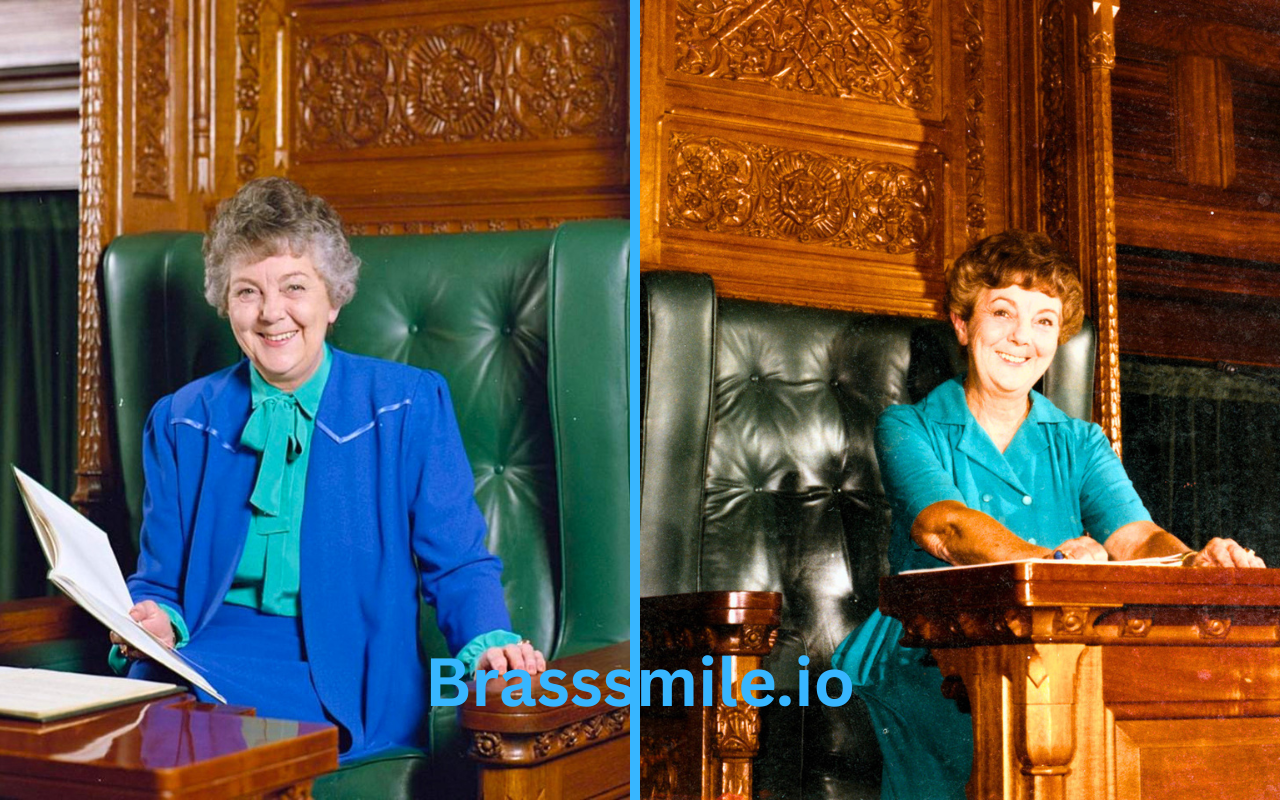
On 11 February 1986, Joan Child was elected Speaker of the House of Representatives — the first woman ever to hold that office in Australia’s history. It was a moment of profound symbolic significance, not just for the Labor Party but for the entire nation.
Her election was seen as a reflection of her “integrity, ability and character” as well as a “recognition of the skills, abilities and aspirations of Australian women”. Yet the path was far from smooth. Some critics grumbled that she was among the least experienced members to become Speaker. Others, particularly male colleagues, tested her authority at every turn — especially during the notoriously rowdy Question Time.
Child presided with a calm, controlled manner, but she never pretended the job was easy. She once described the Speaker’s chair as “the loneliest seat in the House”. She found Prime Minister Bob Hawke and Treasurer Paul Keating — both formidable personalities — “a difficult pair to handle”. When it was suggested that she wear the traditional wig and ceremonial robes of the office to lend her dignity, she reportedly replied with characteristic poise: “When I put my clothes on in the morning, I don’t put my dignity on with them; I always have it with me.”
Child also made history as the last Speaker to work in Old Parliament House and the first to occupy the new Parliament House building, which opened in 1988. She contributed to the building’s final design decisions but found the new Chamber less welcoming and more conducive to disorder than the old one. She much preferred the warmth and cosiness of Old Parliament House — the building that now houses the Museum of Australian Democracy.
Challenges, Resignation, and Enduring Legacy
By 1988, the strain of the Speakership was taking a visible toll. Joan Child suffered from chronic ill‑health, and the relentless pressure of managing a fractious, male‑dominated chamber weighed heavily on her. In 1989, her relationship with the Opposition deteriorated sharply, and Opposition Leader John Howard moved a censure motion against her. Though the motion failed, it was a bruising experience.
In August 1989, Child resigned as Speaker. She continued to serve as the member for Henty until the 1990 election, when her seat was abolished in a redistribution. She retired from Parliament that year, but her contributions were far from over.
In June 1990, she was appointed an Officer of the Order of Australia (AO) in recognition of her service to the Australian Parliament. In 2001, she received the Centenary Medal, commemorating Australia’s 100 years of federation. She was also inducted into the Victorian Honour Roll of Women.
Personal Life: The Woman Behind the Politician
Despite her public prominence, Joan Child remained a deeply private person. Her five sons — Peter, Andrew, Geoff, Gary, and Roger — were the centre of her world. She never remarried after Hal’s death, dedicating herself to her family and her political work.
Those who knew her describe a woman of quiet warmth, sharp wit, and unshakeable principles. She was tiny and soft‑spoken, yet dogged and feisty. She was a women’s rights activist, a resolute anti‑Vietnam War campaigner, and a staunch supporter of Soviet “refuseniks” — citizens blocked from leaving the USSR. She met all men as equals, never asking for special treatment but never accepting less than she deserved.
Her son Peter Child once recalled a light‑hearted moment that captured her character. During a late‑night card game in Old Parliament House, the Leader of the House, Mick Young, burst in and announced, “Madam Speaker, there’s a chook in the house, a chicken!” — referring to a slightly tipsy Labor MP who had donned a chicken suit. Joan looked up from her cards, glass of scotch in hand, and replied calmly: “Mick, get rid of it. You’re the Leader of the House.” That composure under absurdity was quintessential Joan Child.
Net Worth and Financial Reality
Unlike many modern politicians, Joan Child did not amass significant wealth. Her net worth was never publicly documented, and she lived modestly on parliamentary entitlements and her pension. The £57 she had in the bank when Hal died stood in stark contrast to the comfortable salaries of today’s parliamentarians. She was a woman who understood poverty not as an abstract concept but as a lived experience — and that understanding informed every policy position she took.
Social Media and Public Engagement
Joan Child’s political career predated the internet, let alone social media. She had no Twitter, Instagram, or LinkedIn accounts. Her engagement with the public was through the traditional channels of the time — town hall meetings, letters, and the press. In an era of curated online personas, her legacy stands as a reminder that authentic leadership does not require a digital footprint; it requires integrity, courage, and a genuine connection to the people you serve.
Recent Updates and Enduring Influence
Joan Child passed away on 23 February 2013, at the age of 91. She was farewelled with a state funeral in Melbourne, an honour reserved for those who have made an exceptional contribution to the nation. Prime Minister Julia Gillard, herself a pioneering woman in Australian politics, paid tribute: “Women like Joan didn’t have a guide book. Instead, they wrote it… Joan gave us her example: the example of a smart, confident woman succeeding in the public sphere. Not only succeeding against the odds but resetting those odds for those that came in her footsteps.”
Governor‑General Quentin Bryce read a poem in her honour, calling her “a true pioneer: feisty, visionary, gutsy, a first many times over”. Anna Burke, who became the second female Speaker in 2012 — and who had sought Joan’s advice — said: “She’s always been an inspiration to me… She really made a huge effort to ring me up and to wish me well and just to say, hang tough, you know, just be yourself and don’t give them an inch.”
Today, Joan Child’s legacy lives on in every woman who enters Parliament, in every policy that protects working families, and in every young girl who dares to believe that she, too, can lead.
Future Goals and Ongoing Projects
Though Joan Child is no longer with us, her influence continues to shape Australian politics. The Labor Party’s affirmative action quotas for women, the growing number of female parliamentarians, and the ongoing conversations about workplace dignity and gender equality all owe a debt to her pioneering spirit. Her story is taught in schools, preserved in the National Archives, and celebrated in the Museum of Australian Democracy. Her life’s work is not finished — it is carried forward by each new generation of leaders who refuse to accept the world as it is, and instead insist on building the world as it should be.
Conclusion: A Legacy of Resilience and Purpose
Joan Child’s journey from a widowed cleaner to the Speaker’s chair is one of the most remarkable stories in Australian political history. She did not have privilege, wealth, or connections. She had grit, principle, and an unshakable belief in the power of ordinary people to shape their own destiny. She faced down grief, poverty, and a political system that was not designed for women like her — and she won not by imitating men, but by remaining utterly, unapologetically herself.
Her legacy is not just in the records she set or the honours she received. It is in the doors she opened, the example she set, and the quiet dignity with which she carried herself through every trial. As Joan Child continues to pave the way for future generations, her story stands as a reminder of how resilience and purpose can shape a meaningful legacy. She proved that it is never too late to start again, that hardship can be transformed into strength, and that the most powerful leadership often comes from the most unlikely places.
Read this to: Dr. Bennet Omalu: The Pathologist Who Took On the NFL and Changed Sports Forever
Frequently Asked Questions (FAQs)
1. Who was Joan Child?
Joan Child was an Australian politician who made history as the first woman to serve as Speaker of the House of Representatives. She was also the first female member of the Australian Labor Party ever elected to the House of Representatives.
2. When and where was Joan Child born?
She was born Gloria Joan Liles Olle on 3 August 1921 in Yackandandah, Victoria, Australia.
3. What were Joan Child’s major achievements?
Her major achievements include being the first female Speaker of the House of Representatives (1986–1989), the first Labor woman in the House of Representatives, and receiving the Order of Australia (AO) in 1990.
4. How did Joan Child enter politics?
She joined the ALP in 1964, volunteered for Jim Cairns, and won the seat of Henty in 1974 after an unsuccessful attempt in 1972.
5. What challenges did she face as Speaker?
She faced resistance from male colleagues, particularly during Question Time, and struggled with chronic ill‑health caused by the strain of the role. She also dealt with a censure motion from Opposition Leader John Howard in 1989.
6. Was Joan Child married? Did she have children?
Yes. She married Harold (Hal) Child in 1942 and had five sons: Peter, Andrew, Geoff, Gary, and Roger. Hal died suddenly in the mid‑1960s.
7. What did Joan Child do before politics?
After being widowed, she worked as a cleaner, factory worker, and cook to support her five sons. She also had a background in advertising before her husband’s death.
8. Did Joan Child have social media accounts?
No. Her political career ended before the digital age, and she had no public social media presence.
9. What is Joan Child’s net worth?
Her net worth was never publicly documented. She lived modestly on parliamentary entitlements and her pension.
10. When did Joan Child die, and how was she honoured?
She died on 23 February 2013 at the age of 91. She received a state funeral in Melbourne, with tributes from Prime Minister Julia Gillard and Governor‑General Quentin Bryce.
11. Why is Joan Child important today?
She is a symbol of resilience and gender equality in Australian politics. Her story inspires women to pursue leadership roles and reminds us that perseverance can overcome even the most daunting obstacles.
12. Where can I learn more about Joan Child?
You can explore resources from the National Archives of Australia, the Parliamentary Education Office, and the Australian Women’s Register for detailed historical records and educational materials.