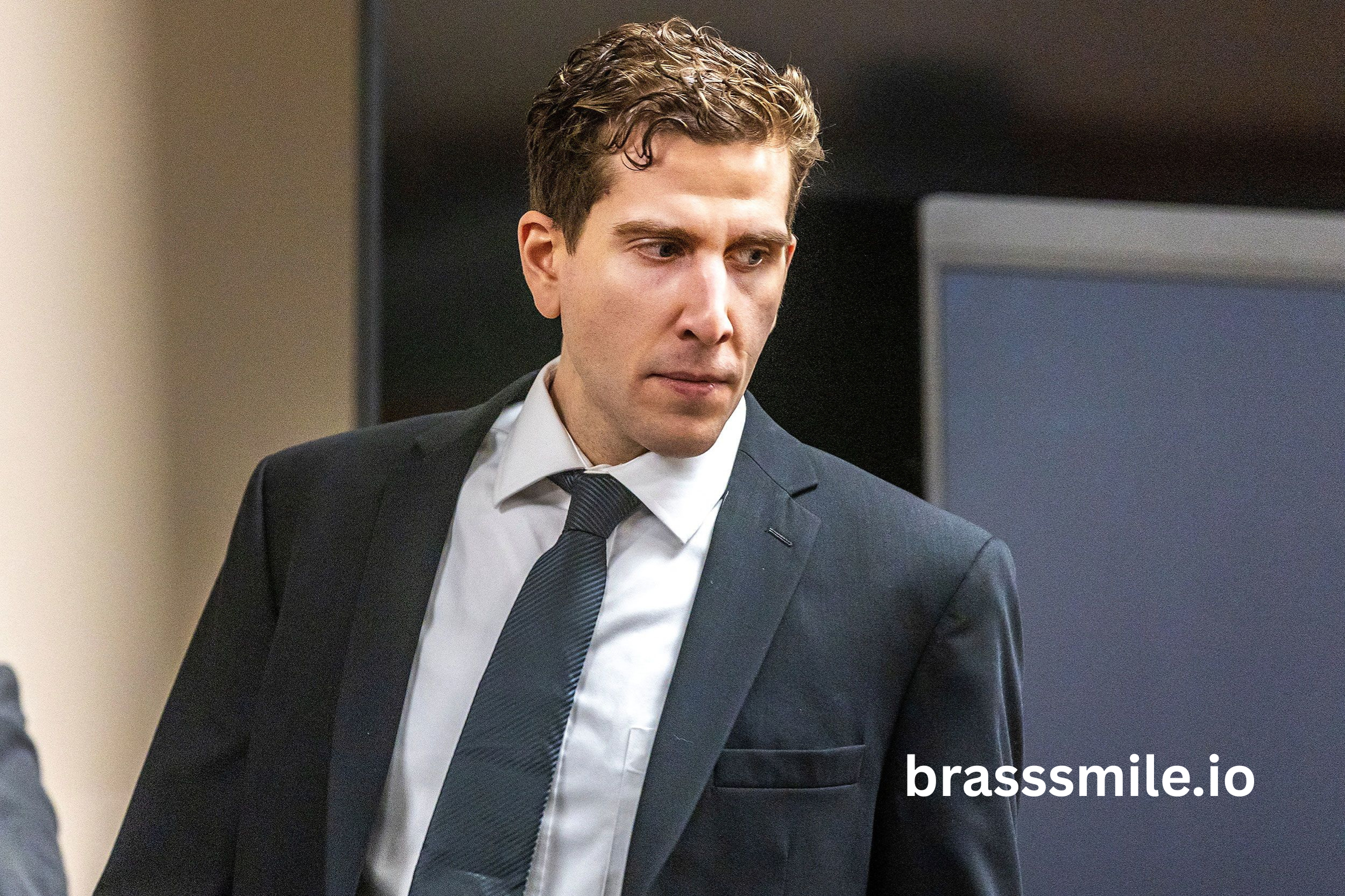
Chilling Kohberger Trial: Shocking Truths and Unanswered Questions
Introduction
Remember where you were when the news first broke about the Idaho student murders? For most of us, it felt like a gut punch. Four young lives lost in a quiet college town. Then came the arrest of Bryan Kohberger, a criminology Ph.D. student. The Kohberger trial has since become one of the most watched legal battles in modern memory. It is a case that mixes academic obsession, DNA science, and a haunting 911 call.
In this article, we will walk you through what we know so far. We will break down the evidence, the defense strategy, and the key players. You will get a clear picture of the twists and turns. Think of this as your friendly guide to a very complex case. No legal degree is required. Just a desire to understand what happened in Moscow, Idaho, and what comes next.
We will cover the good, the bad, and the deeply unsettling. By the end, you will be caught up on every major detail. Plus, we will answer the most common questions people are asking right now. Let us get started.
What Is the Kohberger Trial About? A Quick Refresher
If you need a reminder, you are not alone. The case has many layers. At its center is the brutal stabbing of four University of Idaho students. The victims were Madison Mogen, Kaylee Goncalves, Xana Kernodle, and Ethan Chapin. It happened in the early morning hours of November 13, 2022.
For weeks, the town of Moscow was on edge. No suspect was named. Then, nearly seven weeks later, police arrested Bryan Kohberger at his family’s home in Pennsylvania. He was a PhD student at Washington State University, just a short drive from Moscow.
The Kohberger trial is the legal process to determine if he is guilty of these murders. He has pleaded not guilty to four counts of first degree murder and one count of burglary. The prosecution says they have strong evidence. The defense says the evidence is circumstantial and flawed.
What makes this trial so gripping? It is the combination of high tech forensic science and old fashioned detective work. It is also the haunting question of “why.” A student of crime allegedly becoming a killer. That irony is hard to swallow.
The Key Evidence in the Kohberger Trial
Let us talk about what the prosecution is bringing to the table. Remember, everything we discuss is still alleged until a jury decides. But the details are striking.
DNA on a Knife Sheath
This is the big one. Investigators say they found a single source of male DNA on a knife sheath. The sheath was left on a bed next to one of the victims. That DNA allegedly matched Bryan Kohberger. They got a sample from his parents’ trash in Pennsylvania to make the match.
I have followed many crime cases, and DNA evidence can be powerful. But it is not perfect. The defense will argue about how the sheath was handled. They will question contamination. Still, for many observers, this is the centerpiece of the case.
Cell Phone Data
Prosecutors say Kohberger’s phone was near the victims’ home at least twelve times in the months before the murders. Those visits often happened late at night. On the night of the killings, his phone allegedly stopped reporting location data. That is called “going dark.” He turned off his phone or put it in airplane mode.
When his phone came back online, it showed him traveling away from Moscow toward his apartment. This timeline is crucial. But the defense will point out that Kohberger liked to hike and run at night. They will argue that being near the area is not a crime.
A White Hyundai Elantra
Surveillance cameras caught a white sedan driving past the King Road house around the time of the murders. Police searched for a white Hyundai Elantra from 2011 to 2013. Kohberger owned a 2015 Elantra. That is close, but not exact. The prosecution will argue it is a near match. The defense will hammer the discrepancy.
You can see the pattern here. Each piece of evidence has a potential counter argument. That is what makes the Kohberger trial so fascinating and unpredictable.
The Defense Strategy: What We Expect
Kohberger’s defense team is led by public defender Anne Taylor. She has a reputation for being sharp and aggressive. So what is their game plan?
First, they will attack the timeline. The stabbings likely happened between 4:00 and 4:25 AM. The defense will argue that no one actually saw Kohberger at the house. They will question the surviving roommates’ memories and statements.
Second, they will challenge the DNA. The amount of DNA on the sheath was tiny. It was touch DNA, not blood or semen. The defense can argue that it could have been transferred innocently. Maybe Kohberger touched a door handle at a store, then someone else touched it, and so on. It is a long shot, but possible.
Third, they will bring up other potential suspects. There was a mysterious online account named “jackshowcow” posting odd things. There was also a man seen on a neighbor’s ring camera wearing a mask. The defense will argue that police focused too quickly on Kohberger and ignored other leads.
I think the defense’s strongest move is to create doubt about the lack of a murder weapon. No knife has ever been found. Without it, proving the exact method and intent is harder. The prosecution will say a killer would hide or destroy the weapon. The defense will say “where is the proof?”
The Victims: Never Forgotten
Before we dive deeper into legal tactics, let us pause. This trial is about four people who will never come home. Madison Mogen was 21. Her best friend Kaylee Goncalves was also 21. They grew up together. They died together.
Xana Kernodle was 20. She was described as bubbly and loving. Her boyfriend, Ethan Chapin, was 20. He was a triplet from a big, close family. Their loss echoes far beyond the courtroom.
The Kohberger trial brings their names back into headlines. For their families, every hearing is another wound. As you read about legal maneuvers, remember that real people are at the heart of this. Their absence is the reason we are all here.
The Role of Social Media and Public Opinion
This trial is not happening in a vacuum. It is playing out on TikTok, Reddit, and YouTube. Armchair detectives have analyzed every photo and police scanner audio. Some of that attention has helped. Some has hurt.
On the positive side, public pressure likely pushed police to release information faster. Online sleuths pointed out the white car early. But there is a dark side too. The families have faced harassment. Unrelated people have been falsely accused. Rumors spread like wildfire.
My recommendation? Follow the court documents, not the influencers. The real story is in the filings. Websites like the Idaho Judicial Cases of Interest page are free to access. Read the affidavits yourself. Judge the evidence on its own terms.
Social media can make you feel like an expert overnight. But remember, no one has seen all the evidence yet. The trial will reveal much more than any leaked video or anonymous post.

The Legal Road So Far: A Timeline
Let us walk through the major events of the Kohberger trial journey.
-
November 13, 2022: The murders occur. The 911 call is made around noon the next day when friends come over.
-
December 30, 2022: Kohberger is arrested at his parents’ home in Pennsylvania.
-
January 3, 2023: He agrees to be extradited to Idaho.
-
May 22, 2023: He stands silent during his arraignment, so the judge enters a not guilty plea on his behalf.
-
August 2023: The defense files motions to change the venue, arguing Kohberger cannot get a fair trial in Latah County.
-
October 2023: The judge denies a speedy trial request from Kohberger. That signals the defense needs more time.
-
April 2024: A hearing focuses on the genetic genealogy used to identify Kohberger. The defense wants it thrown out.
-
Late 2024 and early 2025: More hearings on evidence suppression. The trial date keeps shifting.
As of right now, the trial is expected to begin in summer 2025. But do not be surprised if it moves again. High profile murder trials often take years.
Why the Kohberger Trial Matters Beyond the Verdict
You might wonder why this case has captured the world’s attention. There are many murders each year. What makes this one different?
First, it hits close to home for anyone who went to college. A house full of students. A quiet street. A killer walking in. It taps into a primal fear. Your safe place might not be safe.
Second, it is the intersection of criminology and crime. Kohberger was studying criminal justice. He wrote about emotions and decision making in criminals. Now he stands accused of being one. That irony is straight out of a novel.
Third, the case tests new forensic techniques. Genetic genealogy helped identify Kohberger. But is that legal? Does it violate privacy? Courts are still figuring this out. The Kohberger trial could set a precedent.
I believe this trial will be studied in law schools for years. Not because it is simple, but because it is messy. It shows how modern evidence works. It also shows how fragile that evidence can be.
What to Watch For as the Trial Unfolds
If you want to follow along once the trial starts, here are my tips. Focus on three key moments.
Opening statements. Listen to how each side tells the story. The prosecution will paint a picture of a stalker turned killer. The defense will plant seeds of doubt early.
The DNA expert testimony. This will make or break the case. Pay attention to how the DNA was collected, stored, and analyzed. One small mistake could unravel everything.
The surviving roommates’ testimony. Two roommates were home during the murders and survived. One reportedly saw a masked man. Their accounts, given under oath, will be powerful. But memory is tricky, especially after trauma.
Also watch for jury selection. In a case this public, finding impartial jurors is hard. The judge might bring in jurors from another county. That alone tells you how big this trial is.
Potential Outcomes of the Kohberger Trial
Let us be honest. No one has a crystal ball. But we can look at possible scenarios.
Guilty on all counts. If the DNA is strong and the cell phone data matches, the jury could convict. Kohberger would face life in prison or possibly the death penalty. Idaho has capital punishment, though it is rarely used.
Mistrial. If something goes wrong, like juror misconduct or evidence errors, the judge could declare a mistrial. That would mean starting over with a new jury. It is rare but possible.
Acquittal. This is the defense’s goal. If they create reasonable doubt, Kohberger walks free. Given the DNA and car evidence, this seems unlikely to many legal experts. But remember, “unlikely” is not “impossible.”
Conviction on lesser charges. A jury might find him guilty of burglary but not murder. Or guilty of manslaughter instead of first degree murder. That would be a partial victory for the defense.
Personally, I think a full acquittal is a long shot. But I have been surprised before. Juries are human. They get tired. They get emotional. One stubborn holdout can change everything.
Common Questions People Are Asking
You have questions. We have answers. Here are some of the most searched topics related to the Kohberger trial.
Why did it take so long to arrest Kohberger?
Police needed to build a solid case. They had DNA but no direct match until they got his father’s trash sample. They also tracked his phone and car. Rushing an arrest could have ruined the case.
Did Kohberger know the victims?
There is no public evidence that he did. The prosecution says he likely spotted them online or at a restaurant where one victim worked. The defense says he had no connection whatsoever.
What about the other roommates?
Two women were on the first floor and heard noises. They did not call police until the next morning. The defense might question why. But trauma and fear explain a lot. It is not suspicious on its own.
Will the trial be televised?
Idaho allows cameras in the courtroom, but the judge has restrictions. You will likely see some footage, but not everything. Sensitive evidence and victim impact statements might be off limits.
Can Kohberger get the death penalty?
If convicted of first degree murder, yes. The prosecution has not decided yet whether to seek it. They will likely wait until after the trial to decide. Family input will play a role.
Conclusion: Staying Informed Without Losing Your Mind
Following a trial like this can be exhausting. New information drops every week. Rumors fly. Emotions run high. My advice? Take breaks. Read trusted sources. Remember that the justice system is slow for a reason.
The Kohberger trial will eventually end. A jury will speak. But that verdict will not bring back four amazing young people. It will not fully answer “why.” What it will do is hold someone accountable if the evidence proves guilt.
Until then, stay curious but careful. Ask questions but avoid jumping to conclusions. And if you feel overwhelmed, step away. Your mental health matters more than any true crime update.
Now I want to hear from you. What piece of evidence do you find most compelling? Or most troubling? Drop your thoughts in the comments. Let us keep the conversation respectful and focused on justice.
Frequently Asked Questions (FAQs)
What is the primary evidence in the Kohberger trial?
The main evidence includes a knife sheath with Kohberger’s DNA, cell phone data placing him near the home, and surveillance footage of a white Hyundai Elantra similar to his car.
Has the murder weapon been found?
No. Law enforcement has never recovered a knife or any other weapon believed to be used in the murders. The defense highlights this as a missing link.
Where is Bryan Kohberger now?
He is being held in the Latah County Jail in Moscow, Idaho, awaiting trial. He has been there since his extradition from Pennsylvania in January 2023.
What is Kohberger’s plea?
He has pleaded not guilty to all four counts of first degree murder and one count of felony burglary. His legal team is actively fighting the evidence.
Could the trial be moved to another city?
Yes. The defense has requested a change of venue, arguing that local media coverage has made it impossible to find an impartial jury in Latah County. The judge has not ruled definitively yet.
How long will the trial last?
Experts estimate four to six weeks from opening statements to verdict. But with jury selection and potential delays, the whole process could stretch to three months or more.
What role did genetic genealogy play?
Investigators uploaded the knife sheath DNA to a public genealogy database. They found distant relatives of Kohberger, then built a family tree to narrow down suspects. That led them to him.
Can I attend the trial in person?
Yes, the courtroom is public. But seating is limited. You would need to arrive very early. Also, security is tight. Check the Idaho courts website for daily updates on seating availability.
What happens if there is a hung jury?
The judge would declare a mistrial. The prosecution can then decide to retry the case with a new jury or drop the charges. Retrials are common in high profile cases.
How can I support the victims’ families?
Several funds were set up for the families in 2022. Check official university pages or gofundme campaigns verified by news outlets. Also, simply remembering the victims’ names and stories is a powerful act of respect.