Chief Keef Age: The Story of a Drill Music Pioneer
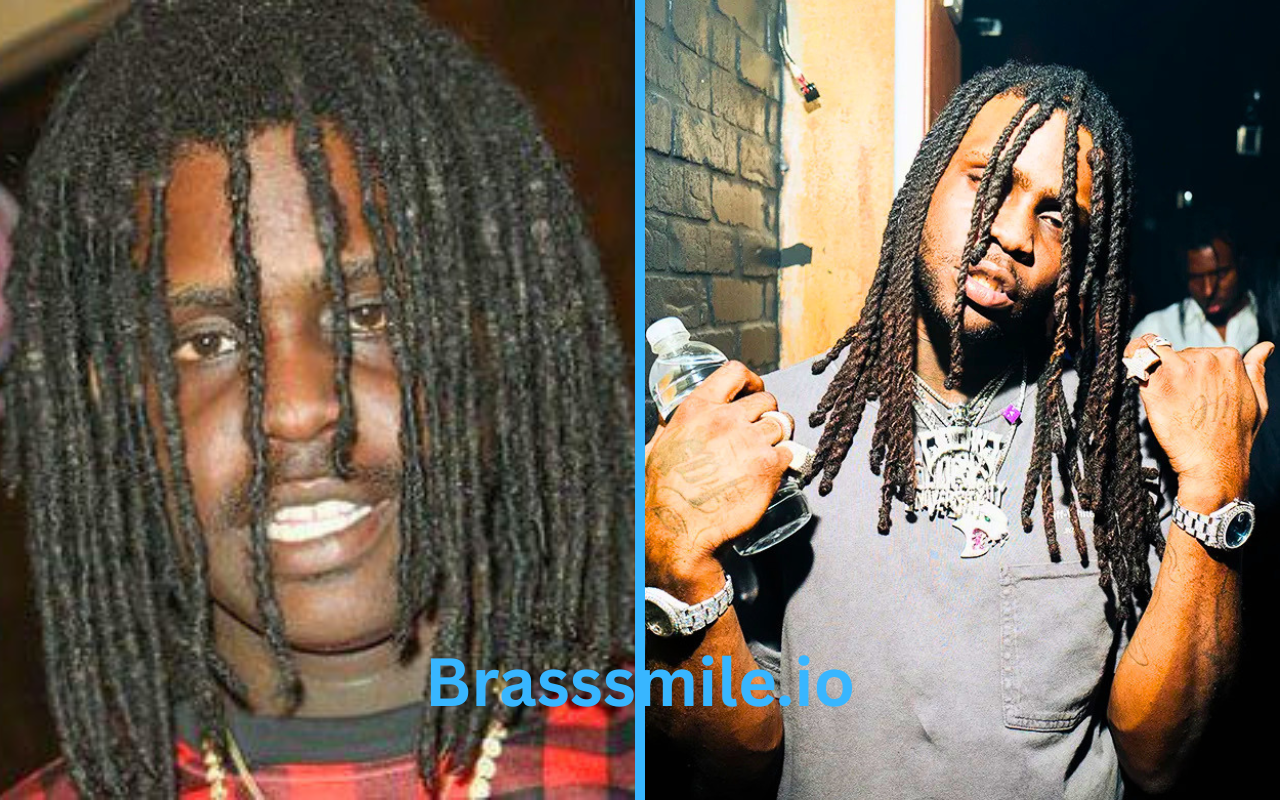
It’s not every day that a teenager on house arrest changes the course of hip-hop, but that is exactly what happened when a 16-year-old from Chicago’s South Side decided to post videos online just to pass the time. The year was 2012, and the kid was Keith Cozart, better known to the world as Chief Keef. In an era dominated by polished pop-rap, his raw, unfiltered, and gritty sound was a shock to the system—a sonic middle finger to the establishment that would eventually birth an entire subgenre. As we look at Chief Keef’s age today, which is 30 as of 2026, it’s astonishing to realize that the man who popularized drill music has been an influential figure in the culture for nearly half his life. His journey from the violent blocks of Washington Park to global recognition is not just a story of musical success; it is a complex narrative about survival, innovation, and the relentless evolution of an artist who refused to be boxed in.
Table of Contents
ToggleQuick Facts About Chief Keef
| Attribute | Details |
|---|---|
| Full Name | Keith Farrelle Cozart |
| Stage Name | Chief Keef, Sosa, BigGucci Sosa, Almighty So |
| Chief Keef Age | 30 years old (Born August 15, 1995) |
| Profession | Rapper, Singer, Songwriter, Record Producer |
| Born | Chicago, Illinois, U.S. |
| Parents | Lolita Carter (Mother), Alfonso Cozart (Father – Estranged) |
| Siblings | N/A (Information not publicly detailed) |
| Partner/Children | Has 9 children |
| Net Worth | Estimated at $4 million |
| @chieffkeeffsossa | |
| Twitter (X) | @ChiefKeef |
| Label | Glo Gang (Glory Boyz Entertainment), 43B |
Early Life and the Chicago Upbringing
Born on August 15, 1995, to a 15-year-old mother, Lolita Carter, Chief Keef came into the world facing immense odds . He was named after his deceased uncle, Keith Carter, who was known as “Big Keef,” carrying a legacy of loss from the very beginning . Growing up in the Parkway Garden Homes, a housing project on Chicago’s South Side known locally as “O-Block,” his environment was a crucible of violence and poverty . The neighborhood was a stronghold for the Black Disciples street gang, a reality that would heavily influence his future music and persona .
With his biological father, Alfonso Cozart, estranged from the picture since Chief Keef was only a year old, he was raised primarily by his grandmother, Margaret Carter . She worked as a school bus driver and acted as his legal guardian, providing some stability in a turbulent childhood . Despite these harsh circumstances, young Keith found an escape through music. He began rapping at the age of five, using his mother’s karaoke machine to record his voice and experiment with creating songs . This early immersion in sound production was a precursor to his later development as a self-taught producer.
He attended Dulles Elementary School and later Dyett High School, but the pull of the streets proved too strong. By the age of 15, he dropped out of high school and dedicated himself entirely to his craft and his life in the neighborhood . It was a dangerous existence where music became a lifeline and a way to tell the stories of a community often ignored by mainstream media. He started to gain local attention in 2011 with mixtapes like The Glory Road and Bang, setting the stage for his eventual breakthrough .
Career Trajectory: From House Arrest to Global Icon
The Viral Breakthrough
Chief Keef’s career trajectory took a pivotal turn in December 2011 when he was arrested for firing a gun from his car and placed under house arrest . Rather than seeing this as a hindrance, he used the confinement to his advantage. With time on his hands, he began posting a series of gritty, low-budget music videos to his YouTube account . These videos, which featured him rapping about his life with an undeniable authenticity, were the forerunners of the Chicago drill music movement .
His song, “I Don’t Like,” featuring Lil Reese, became a local anthem in Chicago . The track perfectly captured the defiant, combative spirit of the city’s south side. Its reach, however, was about to expand exponentially. The song caught the attention of Chicago native and global superstar Kanye West, who created a remix of “I Don’t Like” alongside Pusha T, Jadakiss, and Big Sean . This catapulted the 17-year-old Chief Keef from a regional sensation to a national phenomenon. Suddenly, he was the subject of a massive bidding war between record labels, ultimately signing with Interscope Records for a deal reportedly worth over $6 million .
Finally Rich and Mainstream Success
At just 17 years old, Chief Keef released his debut studio album, Finally Rich, in December 2012 . The album was a massive commercial success, debuting at No. 29 on the Billboard 200 and eventually earning platinum certification in 2022 . The project was essentially the soundtrack to his life, featuring tracks like “Love Sosa,” which would go on to achieve quintuple platinum status, and “Hate Bein’ Sober,” which featured Wiz Khalifa and 50 Cent . It cemented his legacy as the pioneer of drill music, bringing the genre’s dark, trap-infused beats and brutally honest lyricism to a global audience .
However, the success was short-lived in the eyes of his record label. He faced ongoing legal troubles, including a jail sentence for violating probation in 2013 . By October 2014, Interscope Records dropped him from the label, reportedly because Finally Rich failed to meet specific sales targets of 250,000 copies by December 2013 . This was a defining moment that could have ended many careers, but for Chief Keef, it was just the beginning of a new chapter of independence .
Independence and Legacy: The Glo Gang Era
Following his departure from Interscope, Chief Keef didn’t skip a beat. He took control of his career, releasing a prolific amount of music under his own label, Glory Boyz Entertainment (GBE), which is also known as Glo Gang . He released projects like Nobody (2014), Back from the Dead 2 (2014), and the long-awaited Bang 3 (2015) . He also began to experiment more with production, self-producing a significant portion of his own beats . This era of his career saw him evolve from the abrasive teen rapper to a more versatile artist, influencing the “mumble rap” wave and experimenting with different sounds that included dancehall and pop influences on later projects .
His influence grew even as his mainstream chart presence waned. The 2020s brought a resurgence of recognition. His guest appearances on Lil Uzi Vert’s “Bean (Kobe)” and Drake’s “All the Parties” gave him his highest-charting positions on the Billboard Hot 100 . In 2024, he released Almighty So 2, a sequel to a beloved mixtape, which was hailed by critics as a triumphant evolution of his sound . This proves that while his name was first popularized by the raw energy of his youth, his staying power comes from his ability to adapt and grow.
Net Worth and Income Sources
As of 2026, Chief Keef’s net worth is estimated to be around $4 million . This figure has been built through a combination of music sales, streaming royalties, live performances, and astute business ventures. His initial $6 million Interscope deal was a massive advance that, while it didn’t guarantee long-term wealth, established his value .
Today, his income streams are highly diversified. The song “Love Sosa” alone has nearly one billion streams on Spotify, generating significant royalty income . Additionally, he commands between $75,000 and $149,999 for private and corporate events . The Glo Gang label has evolved beyond just a record label into a lifestyle and streetwear brand, selling merchandise that provides a high-margin revenue stream independent of streaming . He also launched a new label venture called 43B (short for “Forget Everybody”) in partnership with BMG and RBC Records in 2022, further expanding his business footprint .
He has invested some of his fortune in luxury assets, including a $14 million Los Angeles residence and a fleet of high-end vehicles, though he has also experienced financial hardships, such as evictions due to unpaid rent in the past . His story is a realistic depiction of financial success in the volatile music industry—marked by massive highs and challenging lows.
Personal Life and Relationships
Chief Keef is a father to nine children . He had his first daughter, Kayden Kash Cozart, at the age of 16 . While he tends to keep his personal relationships private, his role as a father is a significant part of his identity, and he frequently posts pictures with his children on social media. His cousins include fellow Chicago rappers Fredo Santana and Tadoe, who were close collaborators in the early days of the drill movement .
His life has been marred by intense legal battles, mostly stemming from his youth. He faced numerous weapons possession charges, house arrests, and even a performance ban imposed by Chicago authorities . His explicit lyrics and affiliation with gangs often made him a target of law enforcement and a symbol of the city’s violence in the media. His move to Los Angeles was a strategic attempt to distance himself from the volatile environment of Chicago .
He also faced brief controversy in 2023 regarding a relationship with social media personality Bhad Bhabie, which led to “grooming” allegations due to the age gap . Bhad Bhabie publicly denied these claims . Despite these controversies, he has continued to maintain a loyal core fanbase.
Social Media and Public Persona
Chief Keef’s relationship with social media has always been a defining part of his career. He first broke through by posting videos to YouTube from his grandmother’s house during his house arrest, turning his restriction into an opportunity . Today, he remains active on platforms like Instagram (@chieffkeeffsossa) and Twitter (X) (@ChiefKeef), though his presence is often unpredictable.
He uses his social media to promote new music, showcase his luxury lifestyle, and occasionally interact with fans. His persona online aligns with the one he projects in his music—unfiltered, candid, and rebellious. He rarely engages with negative commentary, instead using the platforms as a direct line to his audience, bypassing traditional media gatekeepers .
Recent Updates and Future Goals
In recent years, Chief Keef’s career has seen a significant critical and commercial renaissance. The release of Almighty So 2 in 2024 was a major milestone, proving that his artistic vision remains sharp and relevant . Critics celebrated his evolution from a teen drill pioneer to a more sophisticated and experimental visionary .
He continues to work on new music and is actively nurturing new talent under his 43B label venture . He has moved away from the persona of the “angry young man” and now embraces a role as a veteran in the hip-hop community—a pioneer who has influenced a generation of artists like Lil Uzi Vert, Playboi Carti, and many others who adopted the melodic, slurred delivery that he helped pioneer . His future plans seem focused on expanding his business empire and solidifying his legacy as more than just a drill rapper, but a foundational figure in modern hip-hop culture.
Read this to: Sally Rychlak: The Inspiring Journey of a Higher Education Fundraising Professional
Frequently Asked Questions (FAQs)
1. How old is Chief Keef?
Chief Keef was born on August 15, 1995. He is currently 30 years old as of 2026 .
2. What is Chief Keef famous for?
He is famous for being a pioneer of the drill music subgenre in hip-hop. He rose to fame with the 2012 hit “I Don’t Like” and his debut album Finally Rich .
3. What is Chief Keef’s real name?
His real name is Keith Farrelle Cozart. He is also known by his stage aliases such as Sosa and Almighty So .
4. How many children does Chief Keef have?
Chief Keef has a total of nine children .
5. What is Chief Keef’s net worth?
His estimated net worth is approximately $4 million, accumulated through music sales, streaming, live performances, and his Glo Gang record label and merchandise .
6. Is Chief Keef signed to a label now?
While he has had major label deals in the past, he currently operates independently through his own labels, Glo Gang (Glory Boyz Entertainment) and 43B, the latter of which he launched in partnership with BMG and RBC Records .
7. Why is Chief Keef so influential?
His influence stems from his raw and authentic representation of street life in Chicago. He pioneered the drill sound and aesthetic that shaped the sound of a generation of rappers who followed him. Artists often cite his use of melody, ad-libs, and production style as foundational to modern rap .
8. When did Chief Keef start rapping?
He began rapping at the very young age of five, using his mother’s karaoke machine to record his early experiments .
Conclusion: The Resilience of a Pioneer
As Chief Keef age continues to pave the way for future generations, his story stands as a reminder of how resilience and purpose can shape a meaningful legacy. At just 30 years old, he has already lived multiple lives—from a teenage sensation under house arrest to a disillusioned major label artist, and finally, to an independent mogul and visionary. He didn’t just participate in the drill movement; he was the earthquake that caused it. His journey teaches us that talent is nothing without the grit to survive the aftermath of fame, and that true artists evolve beyond the boundaries that the world tries to place upon them. As he continues to produce music, mentor new talent, and expand his empire, one thing is clear: Chief Keef is no longer just a rapper from Chicago; he is a permanent institution in the history of hip-hop.