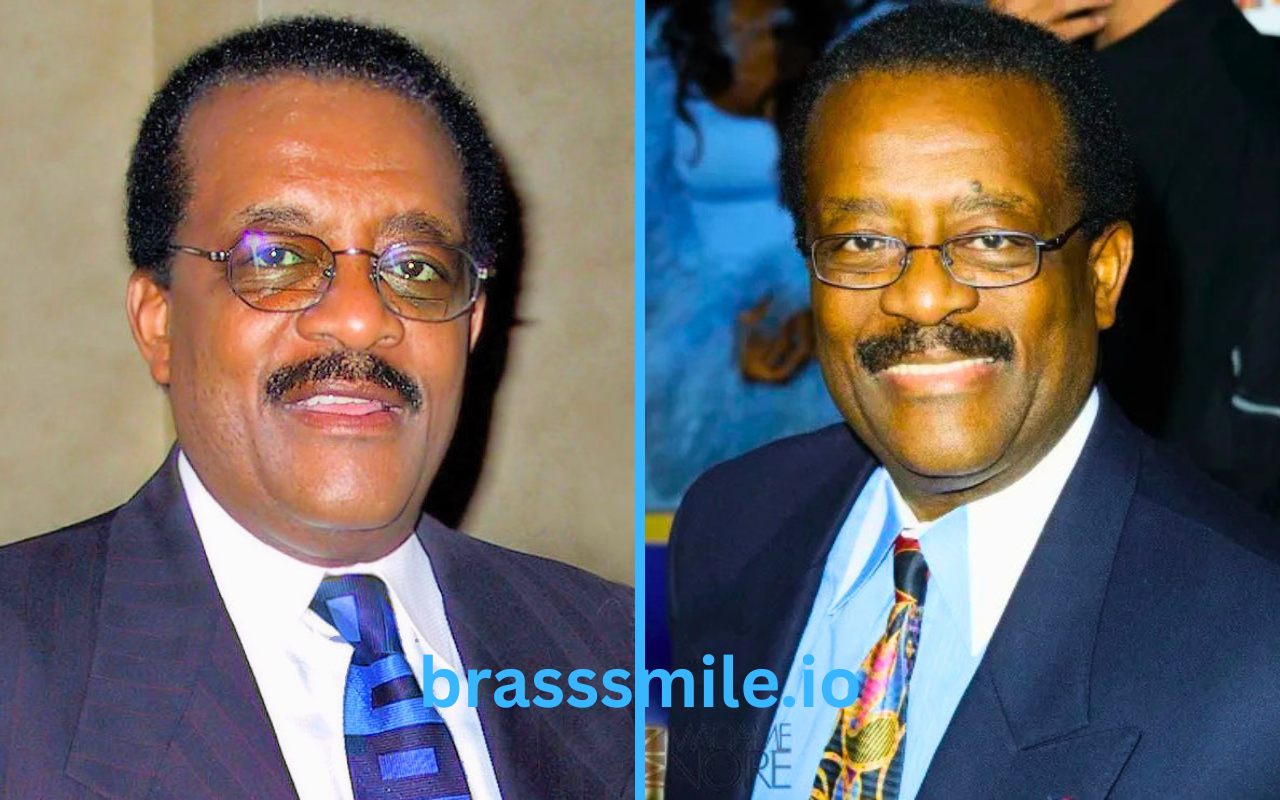
The People’s Champion: The Life and Legacy of Johnnie Cochran
Table of Contents
ToggleIntroduction
Imagine a courtroom so electric that the entire nation stops to watch. It’s 1995, and a charismatic attorney in an impeccably tailored suit is holding up a pair of blood-stained gloves. “If it doesn’t fit, you must acquit,” he declares, his voice resonating with the weight of history. This wasn’t just a legal strategy; it was a cultural moment. The man behind the line, Johnnie L. Cochran Jr., was more than just a lawyer—he was a legal icon, a civil rights champion, and a master of courtroom theater. From representing celebrities like Michael Jackson to fighting for victims of police brutality, Cochran’s career was a tapestry of high-stakes drama and profound social impact. He wasn’t just defending clients; he was challenging a system, often with a flair that made headlines and a conviction that changed lives. His journey from the segregated South to the pinnacle of the American legal world is a story of brilliance, resilience, and an unwavering belief in justice for all.
Quick Facts
| Attribute | Details |
|---|---|
| Full Name | Johnnie L. Cochran Jr. |
| Profession | Attorney, Civil Rights Advocate |
| Born | October 2, 1937 |
| Birthplace | Shreveport, Louisiana, U.S. |
| Died | March 29, 2005 (aged 67) |
| Parents | Johnnie Cochran Sr. (father), Hattie B. Cochran (mother) |
| Spouses | Barbara Jean Berry (divorced), Sylvia Dale (until his death) |
| Children | Tiffany, Melodie, and Jonathan |
| Education | UCLA (B.S.), Loyola Law School (J.D.) |
| Net Worth (at death) | Estimated $8 Million |
From Louisiana to the City of Angels
Johnnie L. Cochran Jr. was born on October 2, 1937, in Shreveport, Louisiana, a time and place where the shadows of Jim Crow laws loomed large . His father, Johnnie Cochran Sr., was an insurance salesman, and his mother, Hattie B. Cochran, was an Avon saleswoman who instilled in him a sense of pride and dignity . Seeking better opportunities and fleeing the oppressive racial climate of the South, the family relocated to California in 1949, during the second wave of the Great Migration . This move to the West Coast was pivotal, exposing young Johnnie to a more diverse and dynamic world. He later became one of only two dozen African American students at Los Angeles High School, where he excelled academically, graduating as the first in his class in 1955 .
Cochran’s path to the law was inspired by a monumental moment in American history: the landmark Brown v. Board of Education case, argued by Thurgood Marshall . Witnessing how the legal system could be used to dismantle segregation sparked a fire in him. He went on to earn a degree in business economics from the University of California, Los Angeles, in 1959, followed by a Juris Doctor from Loyola Law School in 1962 . After passing the California bar exam, he joined the Los Angeles City Attorney’s office in 1963 as a deputy city attorney, honing his skills as a prosecutor . This early experience gave him an intimate understanding of the courtroom from the other side of the aisle, a perspective that would prove invaluable throughout his career.
The Rise of a Legal Maverick
In 1966, Cochran left the prosecutor’s office to start his own private practice, co-founding the firm Cochran, Atkins & Evans . It was here that he began to carve out his niche, specializing in personal injury and, most notably, police brutality cases. During a time of intense social upheaval and tension between minority communities and law enforcement in Los Angeles, Cochran became a fierce advocate for those who felt unheard and mistreated. He quickly earned a reputation as a tenacious and skillful attorney who wasn’t afraid to take on the LAPD. His success made him a beloved figure in the Black community but also a polarizing one among law enforcement .
By the late 1970s, his reputation was so solid that he was appointed as the First Assistant District Attorney in Los Angeles County in 1978 . However, the call of private practice was too strong, and he returned to it in the early 1980s, opening the firm that would eventually become the powerhouse known as The Cochran Firm. He famously began referring to himself as “the best in the West,” a bold claim that he consistently backed up in the courtroom . His client roster read like a who’s who of celebrities and cultural figures, including Michael Jackson, Tupac Shakur, Sean “Diddy” Combs, and Snoop Dogg . Yet, despite the glitz and glamour of celebrity law, Cochran never forgot his commitment to civil rights.
The Case That Defined a Decade
It was the “Trial of the Century” that would forever cement Johnnie Cochran’s name in history. In 1994, he joined the “Dream Team” of lawyers defending former football star O.J. Simpson, who was accused of the brutal murders of his ex-wife Nicole Brown Simpson and her friend Ronald Goldman . With national attention fixated on the courtroom, Cochran’s role as lead attorney was masterful. He skillfully put the prosecution and the Los Angeles Police Department on trial, exposing sloppy evidence collection and playing on deep-seated racial tensions .
The defense strategy was two-pronged: challenge the integrity of the evidence and expose the racial biases of the lead detective, Mark Fuhrman. The trial became a national referendum on race, the police, and the justice system. Cochran’s silver tongue and ability to connect with the mostly African-American jury were instrumental. His closing argument, heavily focusing on the idea that Simpson had been framed by a racist police force, resonated powerfully. The iconic moment came when he urged the jury to acquit if the glove didn’t fit, a simple rhyme that encapsulated the defense’s entire argument . On October 3, 1995, when the not-guilty verdict was read, it was a monumental victory for Cochran, cementing his legacy as a legal legend.
A Champion for the Underdog
While the Simpson case brought him worldwide fame, the cases Cochran was most proud of were those that fought for the wrongfully accused and the victims of injustice. One such case was the 25-year battle to free Elmer “Geronimo” Pratt, a former Black Panther leader and Vietnam veteran who was wrongly convicted of murder . The main evidence against Pratt came from a man later revealed to be a secret police informant. Cochran took up the cause and fought tirelessly until the conviction was overturned in 1997, securing Pratt’s freedom and $4.5 million in compensation .
Similarly, he represented Abner Louima, a Haitian immigrant who was brutally assaulted by New York City police officers in 1997 . Cochran’s work led to an $8.75 million settlement from the city, holding the police department accountable for its officers’ horrific actions . For Cochran, these cases were more than just professional wins; they were personal crusades that embodied his lifelong dedication to civil rights and justice. He saw his legal prowess as a weapon to defend the “little guy” against the overwhelming power of the state.
The Man Behind the Armani Suit
Off the courtroom floor, Johnnie Cochran was known for his impeccable sense of style, often appearing in sharp Armani suits and sporting his signature suspenders. He exuded confidence and charisma, which made him a natural in the media spotlight . His personal life, however, was marked by complexity. He married his first wife, Barbara Jean Berry, in 1959, and they had two daughters, Tiffany and Melodie . Their marriage was tumultuous, with Berry filing for divorce twice and later writing a memoir that alleged abuse, claims Cochran denied . He also had a son, Jonathan, from a long-term extramarital relationship with Patricia Sikora .
In 1985, he married Sylvia Dale, a sales analyst who became a significant source of support . It was Sylvia who reportedly encouraged him to take on the O.J. Simpson case when he was initially hesitant . She remained with him until his death, providing a stable foundation amidst the chaos of his high-profile career. Despite the glamour and controversy, those close to him described him as generous and humble, always erring on the side of what was best for his client .
The Cochran Firm and Financial Legacy
By the time of his death, Johnnie Cochran had built a legal empire. He oversaw a network of 10 law firms across the country, a testament to his business acumen and brand power . While exact figures can be tricky to pin down, his net worth at the time of his death in 2005 is widely estimated to be around $8 million . Some sources suggest that in his peak years, his income could have been significantly higher, with his own self-estimates reaching the $20–50 million range .
His financial success came from a mix of sources: substantial legal fees from high-profile cases (the Simpson trial alone reportedly earned him millions), book deals for his memoirs like Journey to Justice, and lucrative speaking engagements . His primary residence in Los Angeles and several other properties across the country formed the bedrock of his assets . The legacy he left behind, however, far exceeds his financial wealth.
A Legacy That Endures
The conclusion of Johnnie Cochran’s life was met with an outpouring of grief and respect. He was diagnosed with a brain tumor in December 2003 and passed away on March 29, 2005, surrounded by his family . His funeral was a testament to his impact, attended by a diverse array of people from Michael Jackson to political figures, all paying tribute to the man who fought for justice in a uniquely American way .
His legacy lives on through The Cochran Firm, which continues to practice law and advocate for civil rights . In recognition of his contributions, a middle school in Los Angeles was renamed in his honor, and Loyola Law School established the Johnnie L. Cochran, Jr. Chair in Civil Rights . Johnnie Cochran was a man of contradictions—a celebrity lawyer who championed the underdog, a flamboyant showman with a deep moral conviction. He used the law as a stage to expose uncomfortable truths about race and power in America. As Johnnie Cochran continues to pave the way for future generations, their story stands as a reminder of how resilience and purpose can shape a meaningful legacy. He proved that with eloquence, intelligence, and unyielding determination, one person can stand up to a system and demand justice.
Read this to: Dennis Gabor: The Father of Holography and a Visionary of the Future
Frequently Asked Questions (FAQs)
Who was Johnnie Cochran?
Johnnie Cochran was a prominent American trial lawyer best known for leading the defense team that secured the acquittal of O.J. Simpson in 1995. He was also a renowned civil rights advocate who represented victims of police brutality and a roster of high-profile celebrity clients.
What is Johnnie Cochran famous for?
He is most famous for his role in the O.J. Simpson murder trial and his iconic phrase, “If it doesn’t fit, you must acquit,” regarding a pair of bloody gloves. He also represented celebrities like Michael Jackson, Tupac Shakur, and Sean Combs.
How much was Johnnie Cochran worth when he died?
At the time of his death in 2005, Johnnie Cochran’s net worth was estimated to be around $8 million . This wealth was accumulated through his successful legal practice, media appearances, and book deals.
What were some of Johnnie Cochran’s most notable cases?
Besides the O.J. Simpson case, his notable wins included overturning the wrongful conviction of Black Panther leader Geronimo Pratt and winning a massive settlement for Abner Louima, a victim of police brutality. He also successfully defended Sean “Diddy” Combs against weapons charges.
What happened to Johnnie Cochran?
Johnnie Cochran died on March 29, 2005, at the age of 67, from a brain tumor . He had been diagnosed with the condition in 2003 and passed away at his home in Los Angeles.
What is The Cochran Firm?
The Cochran Firm is a national law firm founded by Johnnie Cochran. After his death, the firm continued his legacy of practicing law and advocating for civil rights, with offices across the United States .