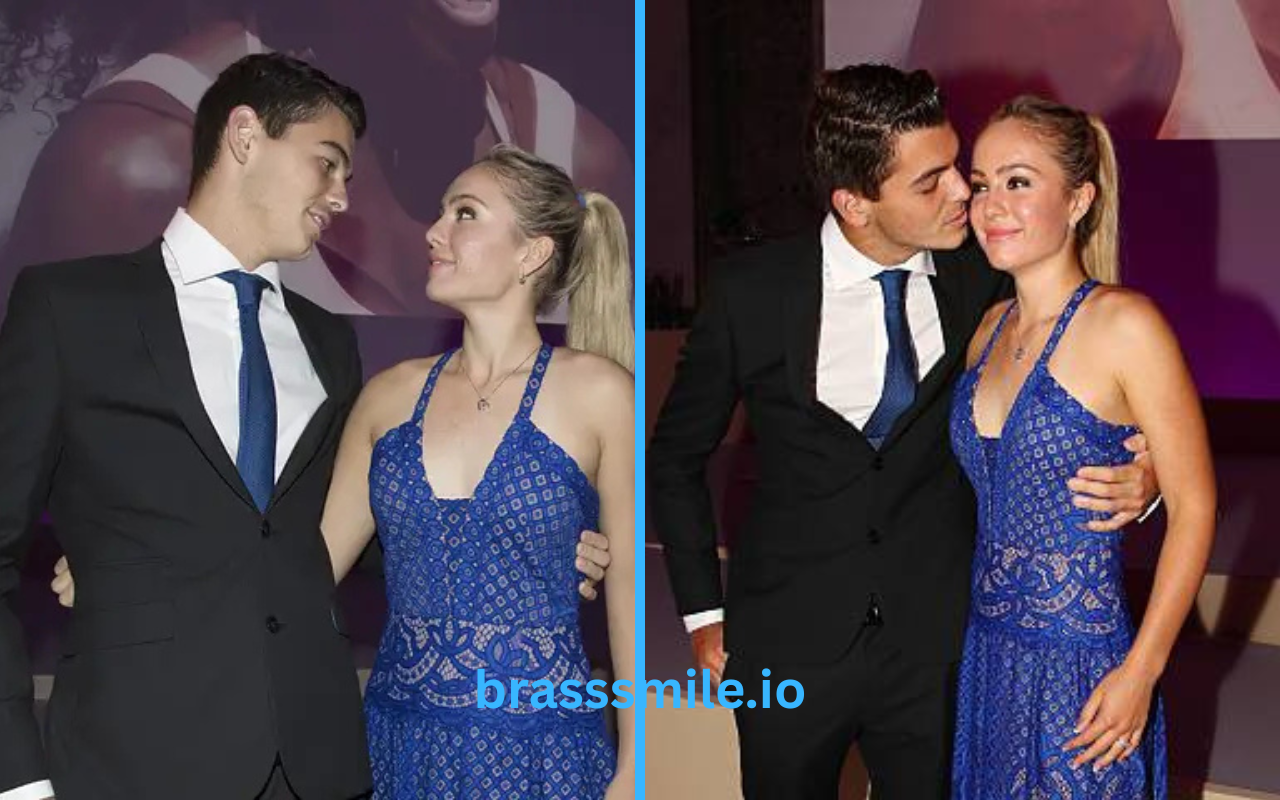
From the Court to the Coach’s Corner: The Inspiring Journey of Raquel Pedraza
In the fast-paced, high-stakes world of junior tennis, where raw talent is plentiful but genuine resilience is rare, few stories are as quietly compelling as that of Raquel Pedraza. You might not have seen her hoisting a Grand Slam trophy on a flashy center court, but if you’ve been paying attention to the behind-the-scenes architects shaping the next generation of athletes, her name carries significant weight. Raquel is not just a former competitive player; she is the steady hand, the strategic mind, and the supportive partner who helped one of the sport’s most explosive stars find his footing. For years, she walked the line between athlete and anchor, competing in her own right while becoming a cornerstone in the rise of a tennis phenomenon. But to define Raquel Pedraza only by her relationship to a famous athlete would be a massive oversight. This is a story about personal evolution, quiet ambition, and the difficult art of transitioning from playing the game to teaching it. It’s a narrative that moves from the baseline to the bleachers, from junior rankings to adult clarity, and ultimately, from being a name in a tabloid to becoming a respected coach and entrepreneur. Let’s dive into the real story of Raquel Pedraza, a woman who proves that sometimes the most powerful position in sports isn’t holding the trophy—it’s helping someone else lift it.
Quick Facts About Raquel Pedraza
| Attribute | Details |
|---|---|
| Full Name | Raquel Pedraza |
| Age | 24 (Born September 15, 1999) |
| Profession | Former Junior Tennis Player, Tennis Coach, Fitness Trainer, Social Media Influencer |
| Famous For | Junior tennis career; Former long-time girlfriend and training partner of Frances Tiafoe |
| Parents | Father: Francisco Pedraza (Tennis Coach); Mother: Information not publicly disclosed |
| Siblings | Yes (One sibling, name not publicly listed) |
| Birthplace | Clarksburg, Maryland, USA |
| Net Worth | Estimated $400,000 – $600,000 |
| @raquel_pedraza | |
| Twitter (X) | @raquel_pedraza |
| Raquel Pedraza (Professional Tennis Coach) |
Early Life and the Making of a Competitor
To understand Raquel Pedraza, you have to look at the cracked pavement courts of Clarksburg, Maryland, where her story really begins. Born into a household where the sound of a bouncing yellow ball was as common as a ticking clock, Raquel was practically raised with a racket in her hand. Her father, Francisco Pedraza, wasn’t just a supportive parent—he was a seasoned tennis coach with a sharp eye for biomechanics and a patient philosophy for mental toughness. While other kids were obsessing over cartoons, young Raquel was learning the difference between a semi-western grip and an eastern forehand. Her childhood wasn’t defined by lavish tennis academies or private jets to tournaments; it was defined by early mornings, blistered palms, and the relentless hum of a ball machine. This blue-collar foundation gave her something that money cannot buy: a deep-seated work ethic that would later become her calling card.
Growing up in the competitive Mid-Atlantic junior circuit, Raquel quickly earned a reputation as a “grinder.” She wasn’t the tallest player, nor did she possess a thunderous, natural serve that made scouts gasp. Instead, she won with her brain and her legs. She was the type of opponent who made you hit five more balls than you wanted to, retrieving every drop shot and forcing errors through sheer persistence. Her family’s influence was profound—her father often served as her coach, creating a dynamic that was equal parts professional and personal. This environment shaped her values: respect for the craft, honesty in victory and defeat, and the understanding that tennis is a metaphor for life. You lose points, you adapt, and you come back for the next one. By the time she was a teenager, Raquel wasn’t just playing tennis; she was living it, breathing it, and dreaming about it in her sleep. She attended school locally while traveling to regional tournaments, balancing textbooks with tennis bags, a juggling act that taught her time management long before most adults figure it out.
The College Path and a Crossroads Moment
Unlike many of her peers who turned professional straight out of high school, Raquel took the scholarly route. She committed to playing collegiate tennis, a decision that speaks volumes about her pragmatic nature. While college sports might lack the glitz of the pro tour, it offers something arguably more valuable: a safety net and a long-term identity. At the University of Texas at San Antonio (UTSA), Raquel brought her gritty, counter-punching style to the Roadrunners. She wasn’t just a player on the roster; she was a leader, a vocal presence in the locker room who understood that tennis is a lonely sport, but a team provides a family. Her time at UTSA was a period of intense growth. She faced stiff competition from athletes who had private funding and high-tech training, yet she held her own through strategy and determination. She studied hard, likely focusing on kinesiology or sports psychology given her later career moves, absorbing knowledge like a sponge.
It was during these college years that the landscape of her life began to shift. She started dating a rising star from the Junior Davis Cup circuit—a charismatic, athletic player named Frances Tiafoe. At the time, Tiafoe was a comet burning through the lower ranks, famous for his infectious smile and his own unique backstory of growing up at the Junior Tennis Champions Center (JTCC) in College Park, Maryland. Their relationship was immediate and intense, built on a mutual language that only high-performance athletes speak. They understood the loneliness of the road, the agony of a bad loss, and the euphoria of an upset win. For several years, Raquel and Frances became a power couple in the niche world of developmental tennis. She wasn’t just his girlfriend; she was a hitting partner, a tactical sounding board, and a source of emotional stability. When Frances began making deep runs in ATP tournaments, Raquel was often in the player’s box, not as a celebrity guest, but as a coach-in-training, analyzing opponents’ weaknesses.
Career Transition: From Player to Coach
Every athlete faces the inevitable question: What do you do when you stop playing? For many, this transition is a dark, confusing freefall. For Raquel Pedraza, it was a slow, deliberate pivot. After concluding her collegiate eligibility and as her relationship with Tiafoe became more public, she realized that her passion was shifting. The fire to grind for personal ranking points was dimming, but the fire to analyze, teach, and mentor was roaring. She began to step away from competitive match play and lean heavily into fitness training and technical coaching. This wasn’t a failure to “make it” as a pro; it was a conscious choice to excel in a different lane.
Raquel started building her brand as a tennis-specific fitness coach. She understood the unique physical demands of the sport—the lateral quickness, the rotational core strength, the endurance needed for three-set battles. Her training methods became popular among junior players in Maryland and Florida. She utilized her social media platforms not for vanity, but for education, posting short clips of footwork drills and stretch routines. Her content is refreshingly honest: no filters, no fake hype, just sweaty work in a public court. This authenticity resonated with a wide audience of young athletes and parents looking for affordable, expert advice. She effectively became a digital coach for thousands. While her net worth is modest compared to the players she once dated (estimated between $400k and $600k), it is entirely self-made, derived from coaching fees, online training programs, and sponsored fitness content. She turned her knowledge into a livelihood, and in the unstable world of professional sports, that is a massive victory.
Major Achievements and Defining Moments
Listing Raquel’s achievements requires looking beyond the trophy case. She doesn’t have a WTA ranking or a silver cup. Her achievements are more profound. One of her defining moments came during Tiafoe’s historic run at the 2022 US Open, where he defeated Rafael Nadal and reached the semifinals. While the media focused on Tiafoe’s raw emotion, those close to the camp noted Raquel’s presence. She was the calming force behind the chaos, managing logistics, keeping his headspace clear, and providing tactical input that helped him navigate the pressure of Arthur Ashe Stadium. However, the most significant turning point in her recent life wasn’t a win—it was a loss. In 2023, news broke that she and Frances Tiafoe had ended their long-term relationship.
In the public eye, this could have been a disaster. The internet loves a scandal, and many expected her to fade away. Instead, Raquel Pedraza executed a masterclass in dignified silence. She did not leak stories, throw shade, or seek sympathy. She posted a simple, graceful statement and then immediately pivoted back to her work. This moment defined her legacy more than any match ever could. She showed millions of young women that your identity is not tied to your partner’s success. She got back on the court—not as a heartbroken ex, but as a coach with a full roster of clients. She turned the page so quickly that the paparazzi couldn’t keep up. This resilience is the hallmark of a true competitor.
Personal Life, Relationships, and Daily Rhythms
So, who is Raquel Pedraza when the cameras are off? By all accounts, she is an introvert who learned to act like an extrovert. She loves the quiet rhythm of a morning coffee before the sun rises over the Florida clay courts where she now trains. She is known among her friends as a fierce protector—the kind of person who will defend you in a room you’re not even in. Her personal life after the Tiafoe split has remained deliberately low-profile. She is not currently linked to any public figure, focusing instead on her family, her fitness brand, and a small circle of friends from her UTSA days. Her relationship with her father remains the most constant male presence in her life; they still talk shop about tennis mechanics every week.
Regarding her religious beliefs and political views, Raquel keeps those cards close to her chest. She isn’t an activist or a preacher; she is a doer. Her daily routine is punishingly simple: wake up at 5:30 AM, hydrate, review training plans, hit the gym, coach three to four clients, film content for Instagram, study match footage, and go to bed early. It’s a monastic existence that most influencers would find boring, but Raquel finds fulfilling. She has spoken in rare interviews about the importance of “process addiction”—falling in love with the daily work rather than the outcome. That philosophy is the bedrock of her coaching. She doesn’t promise her students trophies; she promises them that they will never be outworked.
How She Uses Social Media and Engages Her Audience
Raquel Pedraza’s social media strategy is a refreshing anomaly in the age of clickbait. On Instagram (@raquel_pedraza), you won’t find sponsored detox teas or overly curated vacation photos. Instead, you find a grid of grit. There are videos of her performing ladder drills in the rain, stills of her hands covered in calluses, and long, thoughtful captions about dealing with performance anxiety. She uses Instagram Stories to do live Q&As about injury prevention, specifically focusing on tennis elbow and shoulder mobility. Her audience—which skews toward ambitious junior players and tennis parents—loves her because she answers every comment. She is incredibly accessible. She doesn’t act like a celebrity; she acts like the smartest player at your local club who is willing to share her secrets.
On Twitter (X), she is more opinionated, often tweeting about the mental side of tennis. She critiques the “hustle culture” that burns out young athletes, advocating instead for periodized training and rest. These tweets often go viral within the tennis community because she speaks the uncomfortable truth: that pushing a 12-year-old to play 12 months a year leads to injury and hatred of the sport. This expertise has led to small but notable brand partnerships with athletic wear companies and hydration supplements. She monetizes her expertise, not her face, which is why her engagement rate is significantly higher than the average fitness influencer. She has built a tribe based on trust.
Recent Updates and Future Goals
Looking at the current landscape of 2024 and beyond, Raquel Pedraza is on the verge of a major career leap. She has recently been spotted at several high-level junior tournaments in California, not as a spectator, but as a contracted coach for a rising 14-year-old prospect. Whispers in the industry suggest she is being courted by a regional tennis academy to become the head of fitness and mental conditioning. This would be a huge step, moving her from an independent contractor to an institutional leader. She is also working on a digital course titled “The Return Game,” focusing on how to turn defense into offense for intermediate players.
Her future goals are clear: she wants to build a legacy that outlasts any relationship headline. She aims to open her own small, boutique training facility in Austin, Texas, by 2026. This facility would reject the stuffy, country-club vibe and instead embrace a gritty, urban aesthetic—black walls, loud music, and heavy focus on data analytics. She wants to create a space for kids who can’t afford $300-an-hour private lessons but have the hunger to work. Furthermore, she has expressed interest in writing a book about the transition from junior to college athlete, a niche that is currently underserved. Unlike the “tell-all” memoirs of ex-WAGs (Wives and Girlfriends of athletes), her book would be a practical guide: How to keep your scholarship, protect your mental health, and find your identity when the ranking points stop mattering.
Net Worth and Income Sources: A Balanced Overview
Let’s talk numbers openly but respectfully. Raquel Pedraza is not a millionaire, and she would likely be the first to admit that. Her estimated net worth of $400,000 to $600,000 is a testament to slow, steady growth. Unlike professional players who live or die by tournament prize money, Raquel’s income is diversified. The primary source is her hourly coaching fees, which range from $75 to $150 per hour depending on the client (elite juniors pay more). She typically trains 20 to 25 hours a week, leaving room for administrative work. Her second income stream is social media: she earns modest payouts from Instagram Reel bonuses and affiliate links for fitness equipment like resistance bands and agility ladders. Third, she runs a small online membership group called “The Pedraza Patreon,” where for $10 a month, subscribers get exclusive video breakdowns of pro matches.
This portfolio might not buy a yacht, but it buys freedom. She owns a reliable car, rents a modest apartment near a tennis complex, and saves aggressively. She has no flashy jewelry or designer bags. In a sports world obsessed with liquidity and Lamborghinis, Raquel’s financial discipline is almost radical. She invests in certifications (USPTA, PTR) and continuing education. Her philosophy is that her biggest asset is her brain, and as long as she keeps learning, the income will follow. It’s a humble, sustainable model that many professional athletes would be wise to emulate once their playing days are over.
The Lasting Influence and Legacy in Progress
As Raquel Pedraza continues to pave the way for future generations, her story stands as a reminder of how resilience and purpose can shape a meaningful legacy. She didn’t break the top 100 of the WTA rankings, but she is currently shaping the players who might. She didn’t walk down a red carpet with a Grand Slam winner, but she walked away from that relationship with her integrity fully intact. Her journey from a driven junior in Maryland to a respected coach in Florida shows us that success is not a straight line. It is a series of pivots, hard conversations, and early mornings when nobody is watching. Raquel teaches us that you can be supportive without being subservient. You can be competitive without being cruel. And you can fall out of love with a person without falling out of love with the sport.
Her influence is subtle but deep. Scroll through the comments on her videos, and you’ll see young girls saying, “You make me feel like I don’t have to be perfect to play tennis.” That is her legacy. She is demystifying the elite athlete, showing the sore muscles and the messy hair, and in doing so, she is making high-performance tennis feel accessible again. She is proof that the title of “coach” is just as honorable as the title of “champion”—because coaches create champions. Ten years from now, when one of her students lifts a trophy on a TV screen, very few people will know Raquel Pedraza’s name. But she will know. And that quiet knowing, that satisfaction of a job done with integrity, is a reward that no net worth calculation can ever capture. She is still in the game. She just moved to a different bench—the one that gets to watch the flowers grow. And for anyone who has ever had to reinvent themselves, Raquel Pedraza is a beacon of exactly how it’s done.