The Inspiring Story of Rui Hachimura Parents: Makiko Hachimura and Zakari Jabil
Every great athlete has a foundation stone—someone or something that anchors them when the world gets heavy. For Los Angeles Lakers forward Rui Hachimura, that foundation is built on the unwavering love of his parents, Makiko Hachimura and Zakari Jabil. Their story is one of quiet resilience, cultural fusion, and the kind of parental dedication that turns a child’s dream into a historic reality.
When Rui Hachimura made history in 2019 as the first Japanese-born player ever selected in the first round of the NBA Draft, the world saw a young man with extraordinary talent. But behind that achievement stood two people who had spent years navigating the complexities of raising a mixed-race family in a society unaccustomed to diversity. His father, a Beninese immigrant, and his mother, a Japanese native, built a home where two worlds collided and, against all odds, created something beautiful. This is the story of the parents who shaped one of basketball’s most fascinating international stars.
Table of Contents
ToggleQuick Facts About Rui Hachimura’s Parents
| Category | Details |
|---|---|
| Father’s Name | Zakari Jabil |
| Mother’s Name | Makiko Hachimura |
| Father’s Origin | Benin, West Africa |
| Mother’s Origin | Japan |
| Father’s Ethnicity | African (Beninese) |
| Mother’s Ethnicity | Japanese |
| Children | Four (Rui, Aren, and two daughters) |
| Current Residence | Japan |
| Son’s Profession | Professional Basketball Player (NBA) |
| Son’s Team | Los Angeles Lakers |
A Union of Two Worlds
Long before Rui Hachimura was dazzling crowds at Crypto.com Arena, his parents were quietly building a life together in Toyama, Japan. Zakari Jabil had traveled thousands of miles from Benin, a French-speaking nation in West Africa, to make a new life in Japan. There, he met Makiko Hachimura, a Japanese woman whose quiet strength and discipline would become the bedrock of their family.
Their union was not without its challenges. In a country where homogeneity has long been the cultural norm, an interracial marriage was uncommon. Zakari, as a Black man in Japan, often faced the same stares and whispered comments that his son would later experience. But as Rui would later describe, his father’s friendly and communicative nature helped him bridge cultural gaps. Makiko, on the other hand, brought the steadfastness and meticulous care that is often associated with Japanese parenting. Together, they created a household that honored both heritages.
The couple eventually settled in Sendai, a city on Japan’s northeastern coast, where they raised their four children: Rui, his younger brother Aren, and two sisters. Their home was a blend of languages, traditions, and values—a microcosm of the global citizen Rui would one day become.
The Meaning Behind the Name
Before Rui ever picked up a basketball, his identity was already being shaped by the people who loved him most. His name, “Rui” (塁), carries profound significance. It was his maternal grandfather—an avid baseball fan—who chose the name. In Japanese, “Rui” means “base” or “fortress,” a fitting tribute to the sport that would initially capture young Rui’s heart.
The choice of his surname also tells a story. Rui carries his mother’s family name, Hachimura, rather than his father’s. In Japan, where family registers are meticulously maintained, this decision reflects the cultural practicality of his parents’ union. It also symbolizes how deeply rooted Rui is in his Japanese identity, even as he embraces his Beninese heritage.
His grandfather’s love for baseball wasn’t just symbolic—it was literal. The name Rui was a direct nod to the baseball diamond, and for much of his childhood, that’s exactly where you would have found him. Little did anyone know that this “base” would eventually become the foundation for a basketball career that would captivate the world.
An Unconventional Athletic Beginning
It’s easy to assume that Rui Hachimura was destined for basketball greatness from the moment he could walk. But the truth is far more interesting. Like millions of young boys in baseball-mad Japan, Rui initially gravitated toward the diamond. He played as a pitcher and catcher, showing promise in a sport deeply woven into Japanese culture.
So how did he end up on a basketball court? The answer lies in a persistent friend and a bit of serendipity. In junior high school, a classmate approached him every single morning for two weeks, insisting he try basketball. Rui, initially resistant, finally relented and said, “OK.”That simple “OK” changed everything.
His parents, particularly his father Zakari, supported his athletic pursuits wholeheartedly. They watched as their son’s natural athleticism—a gift he attributes to his father’s genetics—began to flourish on the hardwood. His mother’s influence was equally vital. As Rui would later explain, his work ethic and relentless diligence came directly from Makiko.
This combination proved unstoppable. By high school, Rui was leading his team to three consecutive All-Japan tournament championships. His talents were impossible to ignore, and soon, the basketball world came calling.
The Gonzaga Gamble
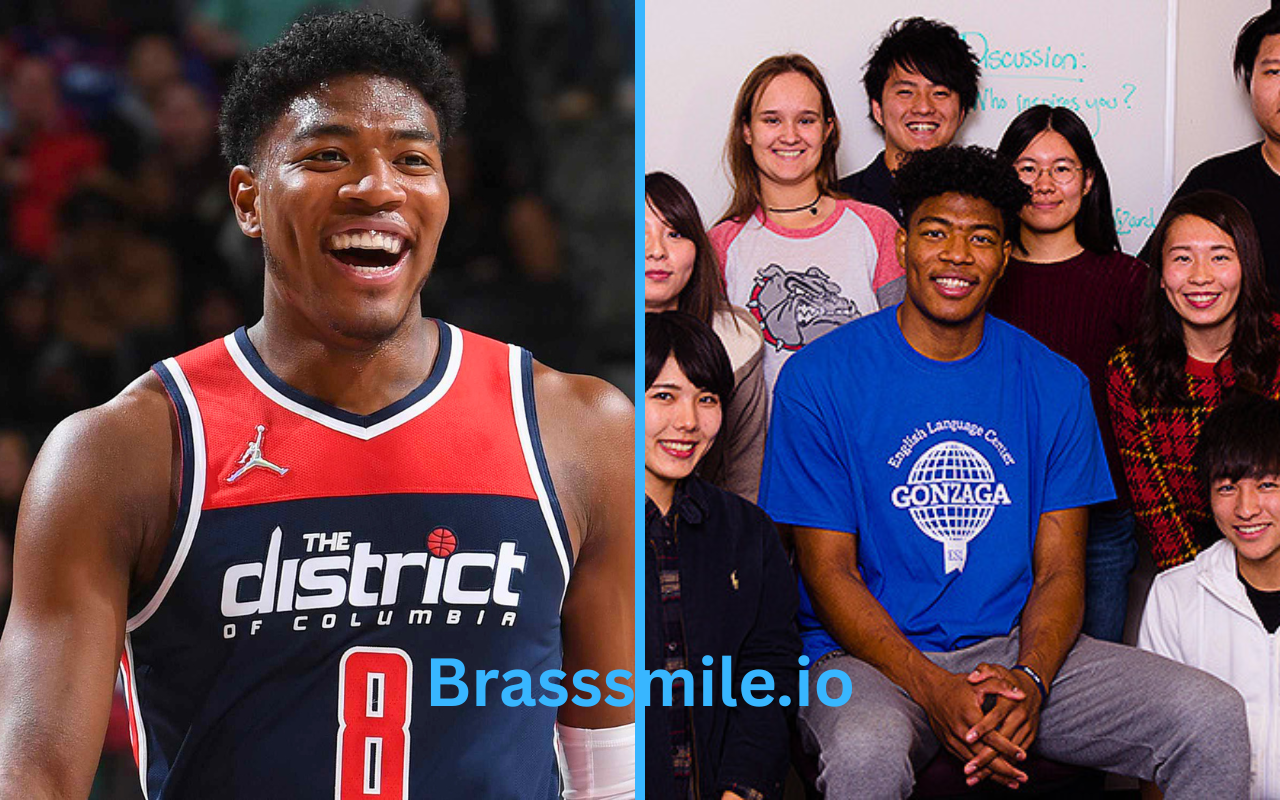
When Rui decided to attend Gonzaga University in Spokane, Washington, his parents faced a difficult decision. Sending their eldest son halfway across the world was no small matter. But they trusted in his dream and supported his choice, which he made partly because Spokane reminded him of his hometown.
The transition was brutal. Rui arrived in the United States speaking little to no English. He spent five to six hours a day studying the language, supplementing his learning with rap playlists and TV shows. His parents, who spoke only a few English words themselves, could only offer moral support from thousands of miles away.
“There were times I was thinking about going home,” Rui admitted. But he couldn’t quit. He had a bigger goal—not just for himself, but for his family and his country. That determination, that refusal to give up, was pure Makiko.
By the end of his college career, Rui had earned West Coast Conference Player of the Year honors. His English comprehension had improved from an estimated 10-20 percent to 90 percent. And his parents, watching from Japan, must have felt an overwhelming sense of pride.
Making History
On June 20, 2019, Rui Hachimura was selected as the ninth overall pick in the NBA Draft by the Washington Wizards. It was a moment that transcended basketball. He became the first Japanese-born player ever drafted in the first round and only the second Japanese-born player to be drafted into the NBA at all.
For his parents, it was validation of every sacrifice they had made. “You know, it means a lot for me and my family,” Rui said at the time. Those simple words carried the weight of a journey that began in Toyama and wound through Sendai, Spokane, and finally, the bright lights of the NBA.
In 2021, Rui carried the Japanese flag at the Tokyo Olympics opening ceremony, a honor reserved for the country’s most respected athletes. It was a full-circle moment—the biracial kid who once felt different, who once “tried to hide from the rest of the world,” now representing his nation on its biggest stage.
The Parents’ Influence
Rui has never been shy about crediting his parents for his success. In a 2019 interview with The Mainichi, he offered a simple but profound explanation of his genetic and spiritual inheritance: “I inherited a privileged body from my father and the diligence to keep making efforts from my mother.”
This statement reveals so much about the household he grew up in. From Zakari, he received the physical tools—the height, the athleticism, the frame that would allow him to compete at the highest level. From Makiko, he absorbed the discipline, the perseverance, and the refusal to ever settle for less than his best.
It’s a beautiful metaphor for what his parents represented: the meeting of two cultures, two sets of values, two ways of being in the world. Zakari’s warmth and Zakari’s ability to connect with people helped Rui navigate social situations. Makiko’s quiet strength gave him the internal fortitude to withstand the pressures of professional sports.
As Rui himself put it, he is “really proud about being half-African and half-Japanese. It’s rare. I’m glad to be like this.”
Overcoming Adversity as a Family
The Hachimura-Jabil family’s journey was never easy. Growing up biracial in Japan, Rui faced challenges that his parents could not fully shield him from. “They looked at me like I was different,” he recalled. He got used to it, he said, because Japan simply didn’t have many Black people at the time.
His father understood this struggle intimately. As a Black man in Japan, Zakari had faced similar stares and assumptions. “I think it was hard for him,” Rui told The Athletic, “but he’s a real friendly guy and can communicate with the people.”
The family’s resilience in the face of these challenges speaks volumes about their character. Rather than retreating, they pushed forward. Rui learned to embrace his identity, eventually becoming an inspiration for other mixed-race athletes in Japan. “I want them to take on a bunch of different challenges,” he said.
His younger brother Aren, who also plays basketball for Tokai University in Tokyo, has faced similar issues. In May 2021, when Aren experienced racial trolling online, Rui publicly supported him. The family’s solidarity in the face of prejudice is a testament to the values instilled by Makiko and Zakari.
The Sibling Dynamic
Rui is the eldest of four children. His brother, Aren Hachimura, followed in his footsteps as a basketball player, competing as a power forward for Tokai University. The two brothers share a close bond, and Rui has been a vocal supporter of Aren’s athletic and personal journey.
Rui also has two sisters, one of whom, Amina, plays basketball and creates art. The Hachimura household, it seems, is one where athleticism and creativity coexist. The family remains based in Japan, a constant reminder of Rui’s roots even as he builds his career in the United States.
Net Worth and Income Sources
As of 2025, Rui Hachimura’s estimated net worth is substantial, reflecting his status as one of the NBA’s prominent international players. His income streams include his NBA salary, endorsement deals, and other commercial ventures.
Rui signed a lucrative contract with the Los Angeles Lakers, and his earnings have grown significantly since his rookie years with the Washington Wizards. Beyond basketball, he has secured endorsement deals with major Japanese brands, including Nissin (the noodle-maker), SoftBank Corp, and Mitsui Sumitomo Bank. He has also graced the cover of GQ Japan, further cementing his status as a cultural icon.
It’s worth noting that while Rui’s financial success is considerable, his parents have remained largely out of the spotlight. Makiko and Zakari have not sought public attention or commercial opportunities, choosing instead to support their son from behind the scenes. Their humility and focus on family values have undoubtedly shaped Rui’s grounded personality.
Social Media Presence and Public Interaction
Rui Hachimura maintains an active presence on social media, where he engages with fans and shares glimpses of his life both on and off the court. His Instagram account (@rui_8mura) features a mix of game highlights, training footage, and personal moments. He uses these platforms to connect with his global fanbase, which spans Japan, the United States, and beyond.
His parents, however, are notably absent from the public social media sphere. They have chosen to maintain their privacy, allowing their son to be the face of the family’s public narrative. This decision reflects their preference for a quiet life away from the cameras—a stark contrast to the high-profile world their son now inhabits.
Recent Updates and Future Outlook
Rui Hachimura was traded to the Los Angeles Lakers in January 2023, a move that brought him to one of the NBA’s most storied franchises. Since then, he has continued to develop his game, averaging 12.8 points, 4.9 rebounds, and 1.3 assists per game in his NBA career. He also represented Japan in the Paris 2024 Men’s Olympic Basketball Tournament, further solidifying his role as the face of Japanese basketball.
Looking ahead, Rui’s goals remain ambitious. He has spoken about wanting to “become an athlete who can compete on the global stage and lead Japanese sport”. With his parents’ unwavering support, there’s little doubt that he will continue to push boundaries and inspire future generations.
Lessons from the Hachimura-Jabil Family
The story of Makiko Hachimura and Zakari Jabil is not just about raising a basketball star. It’s about the power of love that transcends cultural divides, the importance of instilling values in children, and the quiet strength that parents provide even when the world is watching their child.
Their journey offers several lessons:
Embrace your heritage: Rui’s pride in his dual identity is a direct reflection of his parents’ openness. They never asked him to choose one side of his heritage over the other.
Perseverance matters: The diligence Rui inherited from his mother is the same quality that got him through language barriers and cultural shocks in America.
Support without suffocation: Makiko and Zakari allowed their son to pursue his dreams, even when it meant sending him thousands of miles away.
Stay grounded: Despite his fame, Rui remains deeply connected to his family and his roots—a testament to the values his parents cultivated.
Conclusion
As Rui Hachimura continues to pave the way for future generations of Japanese and mixed-race athletes, the story of his parents stands as a reminder of how resilience and purpose can shape a meaningful legacy. Makiko Hachimura and Zakari Jabil built a home where two worlds could coexist, where a child could feel proud of every part of his identity, and where dreams were nurtured with patience and love.
Their influence is visible every time Rui steps onto the court—in his powerful drives to the basket, in his relentless work ethic, and in the quiet dignity with which he carries himself. He is, in every sense, a product of their devotion.
The Hachimura-Jabil family story is ultimately a universal one: it’s about parents who give everything so their children can have more. It’s about the courage to be different in a world that often demands conformity. And it’s about the enduring power of family—the one constant in a life that has taken Rui from Toyama to Tokyo to Los Angeles and everywhere in between.
Read this to: Jimmy Failla Net Worth: The Cab Driver Who Became a Fox News Star
Frequently Asked Questions
1. Who are Rui Hachimura’s parents?
Rui Hachimura’s parents are Makiko Hachimura, a Japanese native, and Zakari Jabil, who is from Benin, a country in West Africa.
2. Where is Rui Hachimura’s father from?
Zakari Jabil is from Benin, a French-speaking West African nation.
3. Where is Rui Hachimura’s mother from?
Makiko Hachimura is from Japan.
4. What is Rui Hachimura’s ethnicity?
Rui Hachimura is of mixed ethnicity—half Japanese (from his mother’s side) and half Beninese (from his father’s side).
5. Does Rui Hachimura have siblings?
Yes, Rui has three younger siblings: a brother named Aren and two sisters.
6. Why is Rui Hachimura’s last name Hachimura and not Jabil?
Rui carries his mother’s surname, Hachimura, which is common in Japanese family register traditions.
7. What does the name “Rui” mean?
In Japanese, “Rui” (塁) means “base” or “fortress.” It was given to him by his maternal grandfather, who was a baseball fan.
8. What did Rui Hachimura say about his parents’ influence?
Rui has said, “I inherited a privileged body from my father and the diligence to keep making efforts from my mother”.
9. Where did Rui Hachimura grow up?
Rui was born in Toyama, Japan, and grew up in Sendai, Japan.
10. What team does Rui Hachimura play for?
As of 2025, Rui Hachimura plays for the Los Angeles Lakers in the NBA.